Almost every compound in a pharmacology catalogue works by fitting into something. Methylene blue mostly does not. Its principal proposed mechanism is that it accepts an electron from NADH and hands it to cytochrome c, shunting past two-thirds of the respiratory chain — a catalytic role rather than an occupancy one. That single structural fact explains why its dose–response curve is biphasic, why a binding assay would miss it, and why the only large trial built on a different hypothesis about this molecule failed.
Key points
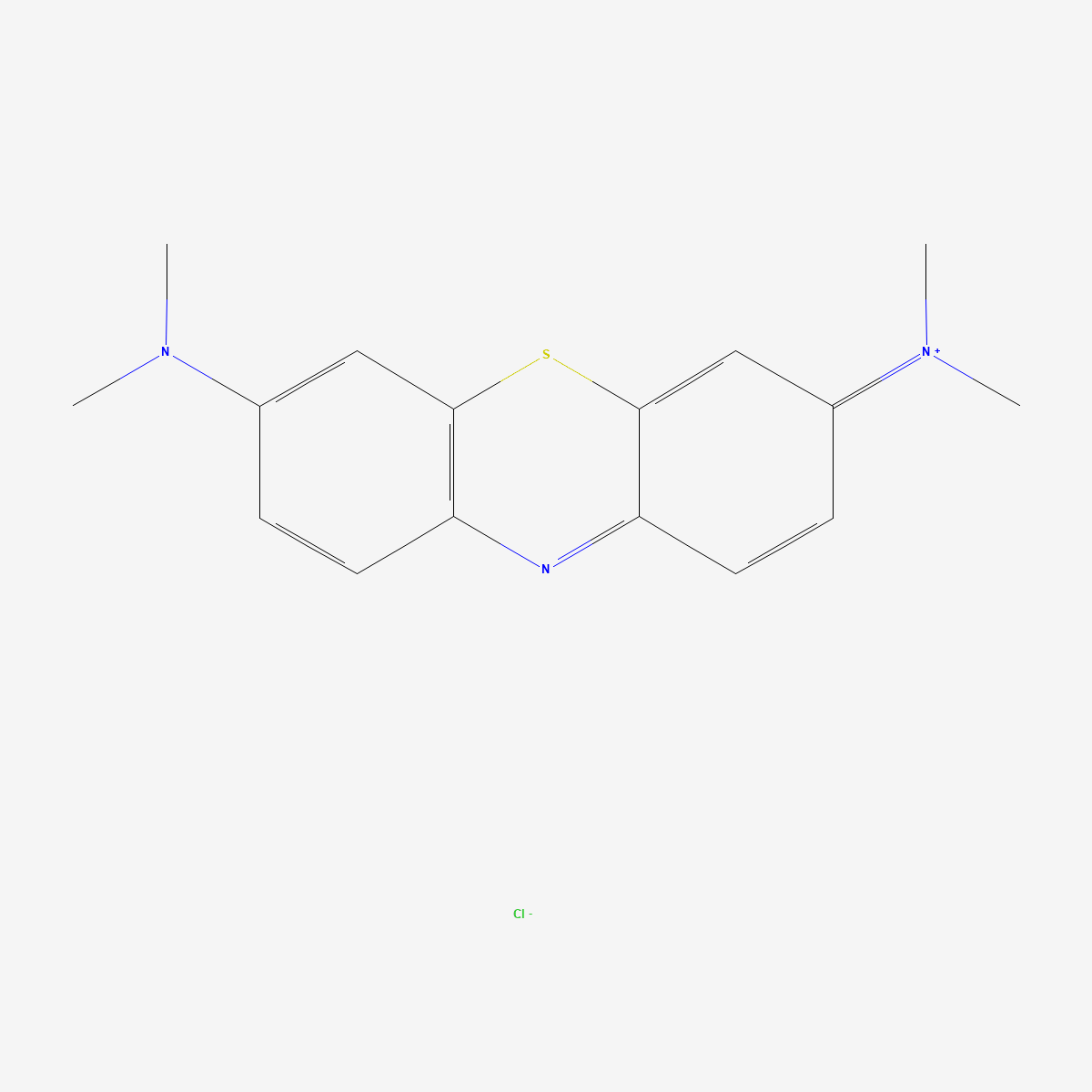
- Structure: methylene blue is the chloride salt of methylthioninium, a tricyclic phenothiazinium cation (CAS 61-73-4, C16H18ClN3S, MW 319.9) bearing two dimethylamino groups on the aromatic system.
- Core mechanism: redox cycling. The oxidised form accepts an electron from NADH in the presence of complex I and donates it to cytochrome c, providing an alternative electron transfer pathway; the molecule alternates between methylene blue and its reduced leuco form.[2][3]
- Hormetic dose–response: opposite effects at low and high concentrations. In rats, 1–10 mg/kg produced no non-specific behavioural changes while 50–100 mg/kg decreased running-wheel activity; only low concentrations raised brain oxygen consumption.[5]
- Potent MAO-A inhibition: a tight-binding reversible inhibitor of monoamine oxidase A, with monoamine oxidase B inhibited only at much higher concentrations.[7] This is a first-order consideration for any experiment involving monoamines.
- The tau hypothesis was tested and failed: a 15-month phase 3 trial of the reduced methylthioninium salt LMTM in 891 patients showed no benefit on either co-primary outcome.[8]
- Status: supplied as a reference standard for laboratory research. Not a medicine and not for human or animal consumption.
A dye that became a drug before pharmacology had the vocabulary
Methylene blue was the first synthetic antimalarial to be discovered, and was used against all types of malaria in the late nineteenth and early twentieth centuries. A systematic review covering the literature to early 2017 identified 21 studies reporting on 1504 malaria patients, two-thirds of them children, and found the compound consistently effective across endemic areas with a strong effect on Plasmodium falciparum gametocyte reduction and synergy with artemisinin-based combination therapy. In individuals with G6PD deficiency it produced a slight but clinically non-significant haemoglobin reduction.[1]
That history is not decoration. It means the molecule has been in human use for well over a century without a receptor ever being identified for it, which is unusual enough to be a clue rather than a gap. The tricyclic phenothiazinium core is an electron acceptor first and a pharmacophore second.
The redox mechanism: an electron shunt, not a binding event
The mechanistic account that has held up best is straightforward electrochemistry inside the mitochondrion. Methylene blue receives an electron from NADH in the presence of complex I and donates it to cytochrome c, bypassing complexes I to III. In vitro this increases oxygen consumption, decreases glycolysis and increases glucose uptake; in rats acute administration enhanced glucose uptake and regional cerebral blood flow.[2] The same review documents the mirror-image consequence in glioma cells, where restoring oxidative phosphorylation reverses the Warburg effect, arrests the cell cycle at S phase and activates AMP-activated protein kinase.
Atamna and Kumar examined the downstream readout and reported increased heme synthesis, increased cytochrome c oxidase (complex IV) and increased mitochondrial respiration, with the key action achieved at nanomolar concentrations. They attributed the mitochondria-protecting activity in part to cycling between the reduced leucomethylene blue and the oxidised form, and noted that the compound is one of the most effective agents known for delaying senescence in normal human cells.[3] A review of the mitochondrial route to neuroprotection covers the same ground across a wider set of models.[9]
The consequence for experimental design is direct. A catalyst is not consumed, so effects can outlast the compound’s measurable presence; and a catalyst has no saturable binding site, so the usual sigmoid occupancy curve does not apply. Callaway and colleagues found that 1 mg/kg increased brain cytochrome c oxidation 24 hours after intraperitoneal injection but not at one or two hours.[6] An assay sampling at conventional pharmacokinetic timepoints would have recorded nothing.
Why the dose–response curve runs backwards at the top
Rojas, Bruchey and Gonzalez-Lima put the point explicitly: the neurobiological effects of methylene blue are not determined by regular drug–receptor interactions or drug–response paradigms, and the compound shows a hormetic dose–response with opposite effects at low and high doses. At low doses it functions as an electron cycler in the respiratory chain; the auto-oxidising property that makes it useful at low concentration is the same property that makes it problematic at high concentration, where it can act on a range of tissue oxidases rather than selectively.[4]
Riha and colleagues quantified this in behaving animals. Rats given 1–10 mg/kg were indistinguishable from saline controls in locomotion and feeding; 50–100 mg/kg decreased running-wheel behaviour; 4 mg/kg improved behavioural habituation and object recognition memory. In parallel, low concentrations increased brain oxygen consumption in vitro and 24 hours after in vivo administration, while higher ones did not.[5] In the spatial memory work, rats given 1 mg/kg after training visited training-baited holes on 66% of probe-trial visits against 31% for saline controls.[6]
The practical implication is that reporting a result for “methylene blue” without a concentration is close to meaningless, and that a failed replication at a different concentration is not necessarily a failed replication at all. This is a compound where the dose axis carries the mechanism.
MAO-A inhibition is not a footnote
Ramsay, Dunford and Gillman quantified inhibition of purified human monoamine oxidase using kinetic assays and visible spectral changes, and found methylene blue to be a potent, tight-binding inhibitor of MAO-A, inhibiting MAO-B only at much higher concentration. Their interactions with the MAO-A active site were confirmed both by the compound acting as an oxidising substrate and as a one-electron reductant. At concentrations reported after intravenous administration, they concluded, MAO-A would be completely inhibited.[7]
For laboratory work this is a confound of the first order. Any experiment in which methylene blue is combined with a monoamine, a monoamine precursor or a reuptake inhibitor has a second pharmacology running alongside the mitochondrial one, and a change in monoamine concentration cannot be attributed to bioenergetics without an MAO control. The finding also explains reports of serotonin toxicity when the compound is given to patients taking serotonin reuptake inhibitors — the prediction came first and the enzymology confirmed it.
The tau hypothesis and its clinical test
A separate line of development treated methylthioninium not as a redox agent but as a selective inhibitor of tau protein aggregation, demonstrated in vitro and in transgenic mouse models. That hypothesis was tested properly. Gauthier and colleagues ran a 15-month randomised, controlled, double-blind, parallel-group trial of LMTM — leuco-methylthioninium bis(hydromethanesulfonate), the stable reduced form — at 115 centres in 16 countries, randomising 891 participants with mild to moderate Alzheimer’s disease.[8]
The prespecified primary analyses showed no benefit at either dose on either co-primary outcome. Change in ADAS-Cog score relative to control was −0.02 (95% CI −1.60 to 1.56) and −0.43 (−2.06 to 1.20) for the two active arms; change in ADCS-ADL was −0.93 (−3.12 to 1.26) and −0.34 (−2.61 to 1.93). Gastrointestinal and urinary effects were the most common adverse events and the most common causes of discontinuation, and dose-dependent reductions in haemoglobin concentration were the most common laboratory abnormality.
One design detail deserves attention from anyone reading this literature. The control arm received 4 mg of LMTM twice daily rather than an inert placebo, because the compound discolours urine and faeces and blinding could not otherwise be maintained. The comparison is therefore between higher and lower doses of the same molecule, not between drug and nothing — which, for a compound with a documented hormetic dose–response, is a genuinely awkward feature rather than a technicality. It does not rescue the result, but it does constrain what can be inferred from it.
Practical notes for laboratory handling
Methylene blue is a photosensitiser as well as a redox catalyst, and illuminated solutions behave differently from dark ones; work intended to probe bioenergetics should control light exposure explicitly rather than incidentally. Solutions are intensely coloured and interfere with colorimetric and absorbance-based assays across the visible range, so plate-reader endpoints need a compound-only control at the working concentration. Because the molecule cycles between oxidation states, the ratio of oxidised to leuco form in a given preparation depends on the reducing environment it has been exposed to, and a stock stored under different conditions is not necessarily the same reagent.
Frequently asked questions
Is methylene blue an antioxidant or a pro-oxidant?
Both, depending on concentration. At low concentration it acts as an electron cycler with antioxidant and respiration-enhancing properties; the same auto-oxidising chemistry produces pleiotropic effects on tissue oxidases at higher concentration, which is the basis of the hormetic curve.[4] A single-concentration experiment cannot distinguish these regimes and should not be reported as though it characterised the compound.
Why do low and high doses have opposite effects?
Because the mechanism is catalytic rather than occupancy-driven. A redox mediator at low concentration supplements electron flow; at high concentration it competes with and diverts it, and engages additional oxidase targets. The measured behavioural crossover in rats sits between 10 and 50 mg/kg, with the memory-facilitating effect around 4 mg/kg.[5]
Did the Alzheimer’s trials of methylene blue derivatives work?
No. The phase 3 trial of LMTM in 891 patients was negative on both co-primary outcomes, and the investigators stated that the results do not support benefit as an add-on treatment in mild to moderate Alzheimer’s disease.[8] That trial tested the tau-aggregation hypothesis, not the mitochondrial one; a negative result on the first does not settle the second, but neither does the second have comparable clinical evidence behind it.
What grade of material is appropriate for research use?
Commercial dye-grade methylene blue is frequently contaminated with related phenothiazinium species and with heavy metals carried through from synthesis, and those impurities have their own redox activity — precisely the property being measured. For bioenergetic work, material characterised by a stated assay method with an impurity profile is the practical minimum. Our methylene blue reference material (CAS 61-73-4), assayed at ≥99% purity, ships with identity documentation available on request.
Related compounds in our catalogue
Because monoamine oxidase A inhibition accompanies everything this compound does, laboratories designing the necessary controls commonly hold L-DOPA reference standard (CAS 59-92-7), the precursor whose decarboxylation product dopamine is itself an MAO substrate, and bromantane reference standard (CAS 87913-26-6), which is reported to act on the dopamine synthesis enzymes upstream of that step.
References
- Lu G, Nagbanshi M, Goldau N, Mendes Jorge M, Meissner P, Jahn A, Mockenhaupt FP, Müller O. Efficacy and safety of methylene blue in the treatment of malaria: a systematic review. BMC Medicine. 2018;16(1):59. doi:10.1186/s12916-018-1045-3 · PMID: 29690878
- Yang SH, Li W, Sumien N, Forster M, Simpkins JW, Liu R. Alternative mitochondrial electron transfer for the treatment of neurodegenerative diseases and cancers: methylene blue connects the dots. Progress in Neurobiology. 2017;157:273–291. doi:10.1016/j.pneurobio.2015.10.005 · PMID: 26603930
- Atamna H, Kumar R. Protective role of methylene blue in Alzheimer’s disease via mitochondria and cytochrome c oxidase. Journal of Alzheimer’s Disease. 2010;20(Suppl 2):S439–S452. doi:10.3233/JAD-2010-100414 · PMID: 20463399
- Rojas JC, Bruchey AK, Gonzalez-Lima F. Neurometabolic mechanisms for memory enhancement and neuroprotection of methylene blue. Progress in Neurobiology. 2012;96(1):32–45. doi:10.1016/j.pneurobio.2011.10.007 · PMID: 22067440
- Riha PD, Bruchey AK, Echevarria DJ, Gonzalez-Lima F. Memory facilitation by methylene blue: dose-dependent effect on behavior and brain oxygen consumption. European Journal of Pharmacology. 2005;511(2–3):151–158. doi:10.1016/j.ejphar.2005.02.001 · PMID: 15792783
- Callaway NL, Riha PD, Bruchey AK, Munshi Z, Gonzalez-Lima F. Methylene blue improves brain oxidative metabolism and memory retention in rats. Pharmacology Biochemistry and Behavior. 2004;77(1):175–181. doi:10.1016/j.pbb.2003.10.007 · PMID: 14724055
- Ramsay RR, Dunford C, Gillman PK. Methylene blue and serotonin toxicity: inhibition of monoamine oxidase A (MAO A) confirms a theoretical prediction. British Journal of Pharmacology. 2007;152(6):946–951. doi:10.1038/sj.bjp.0707430 · PMID: 17721552
- Gauthier S, Feldman HH, Schneider LS, Wilcock GK, Frisoni GB, Hardlund JH, Moebius HJ, Bentham P, Kook KA, Wischik DJ, Schelter BO, Davis CS, Staff RT, Bracoud L, Shamsi K, Storey JM, Harrington CR, Wischik CM. Efficacy and safety of tau-aggregation inhibitor therapy in patients with mild or moderate Alzheimer’s disease: a randomised, controlled, double-blind, parallel-arm, phase 3 trial. The Lancet. 2016;388(10062):2873–2884. doi:10.1016/S0140-6736(16)31275-2 · PMID: 27863809
- Tucker D, Lu Y, Zhang Q. From mitochondrial function to neuroprotection — an emerging role for methylene blue. Molecular Neurobiology. 2018;55(6):5137–5153. doi:10.1007/s12035-017-0712-2 · PMID: 28840449
Research use only. The compounds discussed are supplied as reference standards for laboratory research. They are not medicines, not dietary supplements, and are not for human or animal consumption. Nothing in this article is medical advice or a recommendation for use in humans. Any quantities mentioned are those reported in the published studies cited above and appear solely to describe that research accurately.