In a patch-clamp rig, aniracetam does something clean and reproducible: it blunts AMPA receptor desensitisation and prolongs fast excitatory synaptic currents. In an animal, almost none of it reaches the brain. Oral bioavailability in rat is under 12%, and the brain-to-plasma exposure ratio for the parent compound is roughly 3%. The most interesting thing about this molecule is the gap between those two facts — and the evidence that several of its metabolites, not the parent, carry much of what happens in vivo.
Key points
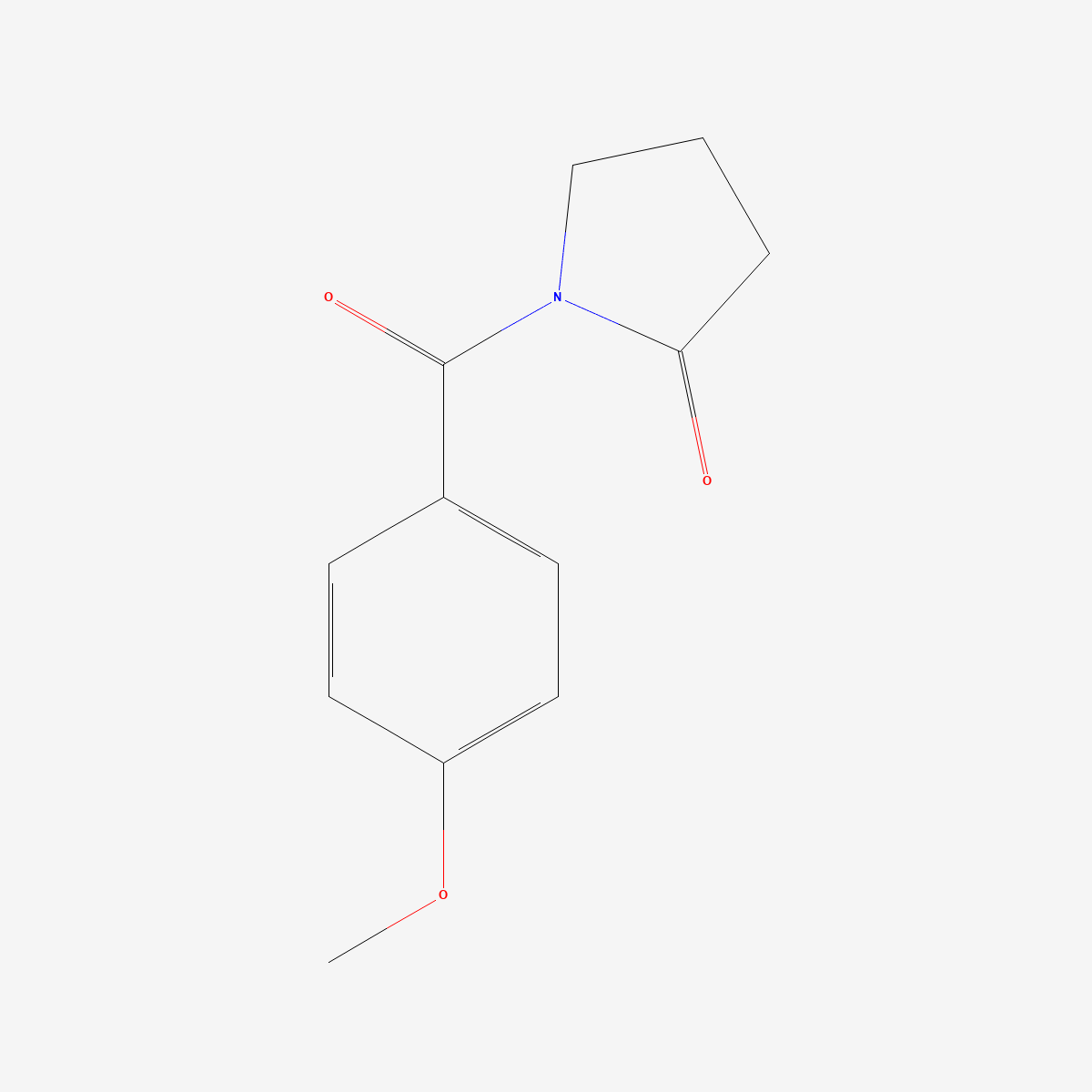
- Identity: aniracetam is 1-(4-methoxybenzoyl)pyrrolidin-2-one (CAS 72432-10-1, C12H13NO3, MW 219.24) — a pyrrolidinone acylated with an anisoyl group.
- Receptor-level action: positive allosteric modulation of AMPA-type glutamate receptors by reducing desensitisation, demonstrated in oocytes[1] and in outside-out patches from hippocampal neurons.[2] It is not an agonist.
- Effective concentration: potentiation was observed above 0.1 mM in the oocyte preparation[1] — a concentration far above anything the parent compound reaches in brain after systemic dosing.
- Disposition: oral bioavailability of 11.4% and 8.6% in rat at 50 and 100 mg/kg, with extensive conversion to three main metabolites.[4] Brain-to-plasma AUC ratio 2.4–3.2% for the parent, 53–55% for the metabolite 2-pyrrolidinone.[5]
- Metabolite pharmacology: N-anisoyl-GABA and p-anisic acid enhance acetylcholine release where aniracetam itself does not,[7] through group II metabotropic glutamate receptors rather than AMPA receptors.[8]
- Status: supplied as a reference standard for laboratory research. Not a medicine and not for human or animal consumption.
The receptor action is genuinely well characterised
Ito and colleagues established the effect in 1990 using two preparations. In Xenopus oocytes injected with rat brain mRNA, aniracetam reversibly potentiated ionotropic quisqualate responses at concentrations above 0.1 mM, while leaving kainate, NMDA and GABA responses in the same oocytes unaffected. The potentiation came with an increase in conductance change but no alteration of receptor affinity for agonist and no change in reversal potential — the signature of an allosteric effect on channel behaviour rather than on binding. The same treatment potentiated intracellularly recorded responses in CA1 pyramidal cells and population EPSPs at both Schaffer collateral-commissural and mossy fibre-CA3 synapses.[1]
Isaacson and Nicoll then identified the mechanism a year later. Using outside-out patches from hippocampal slices, they showed that aniracetam strongly reduces glutamate receptor desensitisation, and that it selectively prolongs the time course and increases the peak amplitude of fast synaptic currents.[2] This is the result that placed aniracetam in every subsequent textbook description of AMPA receptor modulation, and it has been reproduced across preparations for three decades.
A separate binding study complicates the picture in a way that is rarely mentioned. Fallarino and colleagues reported that [3H]aniracetam binds to saturable sites in rat brain membranes with an apparent KD of approximately 70 nM and a maximal density of 3.5 pmol/mg protein, sodium-independent, concentrated in synaptosomal and mitochondrial fractions and low in myelin. Binding was abolished by a preincubation procedure that strips membrane-trapped glutamate and restored by adding glutamate or AMPA but not kainate, and was antagonised by DNQX. Notably, specifically bound [3H]aniracetam was not displaced by aniracetam’s own metabolites, nor by piracetam or oxiracetam.[3]
The tension is a three-order-of-magnitude one: a binding site with nanomolar affinity, and a functional effect requiring hundreds of micromolar. Nothing in the literature resolves it, and anyone citing the 70 nM figure as the compound’s working potency is misreading the paper.
Pharmacokinetics: why the parent compound cannot be the whole story
Ogiso and colleagues measured aniracetam and its metabolites simultaneously by HPLC after intravenous and oral dosing in rats. Plasma concentrations of the parent compound and of 4-p-anisamidobutyric acid — N-anisoyl-GABA — declined biexponentially with rapid terminal decay and short mean residence time. p-Anisic acid showed non-linear, high early concentrations; 2-pyrrolidinone was sustained over a relatively long period. Describing the full time course required a seven-compartment model with ten first-order rate constants and one Michaelis-Menten term. Oral bioavailability of the parent was 11.4% at 50 mg/kg and 8.6% at 100 mg/kg, and the authors concluded that aniracetam is largely metabolised to the three named products.[4]
The companion brain study is the decisive one. Measuring cerebral cortex, hippocampus and thalamus after intravenous and oral administration, the same group found the parent compound distributed rapidly into all three regions but present in low amounts, with a brain-to-plasma AUC ratio of 2.4–3.2%. p-Anisic acid was similar at 3.9–4.2%. 2-Pyrrolidinone reached 53–55%. N-Anisoyl-GABA was below the limit of detection in brain tissue. An in-situ brain perfusion experiment established that 2-pyrrolidinone is not carried across the blood-brain barrier by the neutral amino acid transporter, so its entry is not a facilitated-transport phenomenon. The authors concluded explicitly that the efficacy of dosed aniracetam may partly result from 2-pyrrolidinone penetrating into the brain.[5]
Human data are sparse and come from an unrepresentative population. Endo and colleagues studied six hospitalised elderly female patients with cerebrovascular disease, mean age 84.5 years, after a 200 mg oral dose. Serum anisic acid and p-methoxyhippuric acid peaked at 2 hours and returned to baseline by 6 hours. Mean creatinine clearance was 20–30 mL/min and metabolite half-lives were 4- to 7-fold longer than in young volunteers, with tmax, t1/2 and AUC all increased.[6] With n=6 and severely impaired renal function, this describes a specific clinical population rather than general human pharmacokinetics.
Metabolite pharmacology: two separate mechanisms, neither of them the parent
Nakamura and Shirane examined the cholinergic system in stroke-prone spontaneously hypertensive rats, a strain with demonstrable baseline cholinergic deficits: choline acetyltransferase activity in pons-midbrain and hippocampus and basal acetylcholine release in nucleus reticularis thalami were all lower than in age-matched Wistar Kyoto controls. Repeated aniracetam at 50 mg/kg orally, eleven doses over six days, increased the enzyme activity in thalamus while decreasing it in striatum. Then the critical experiment: local perfusion of N-anisoyl-GABA at 0.1 and 1 µM and p-anisic acid at 1 µM into nucleus reticularis thalami, dorsal hippocampus and prefrontal cortex produced a significant but delayed increase in acetylcholine release, whereas aniracetam itself produced no effect. Direct injection of N-anisoyl-GABA at 1 nmol into the pedunculopontine tegmental nucleus enhanced release in nucleus reticularis thalami.[7]
The follow-up identified the receptor involved, and it is not an AMPA receptor. The delayed acetylcholine release in prefrontal cortex was completely blocked by MCPG, a group I and II metabotropic glutamate antagonist, and by MCCG, a group II-selective antagonist. It was largely unaffected by the group I-selective antagonist AIDA and by the AMPA antagonist YM90K. The group II agonist 1S,3R-ACPD reproduced the effect with similar latency and was blocked by MCCG, while AMPA itself induced a prompt rather than delayed release.[8]
A third study covers the other metabolite. Nishizaki and Matsumura expressed AMPA receptors of defined subunit composition in Xenopus oocytes and tested aniracetam against its metabolites. 2-Pyrrolidinone potentiated kainate-evoked currents through GluR1,2,3 channels in a bell-shaped dose-dependence from 1 nM to 300 µM, maximal at 100 µM, and the potentiation was long-lasting — approximately 180% of basal levels 60 minutes after a 5-minute exposure. It potentiated GluR1,3 similarly but depressed GluR1,2 currents. Aniracetam and p-anisic acid potentiated GluR1,2,3 currents far less, to about 130% and 103% respectively, and anisamide butyrate had no potentiating effect at all. The 2-pyrrolidinone effect was blocked by the CaMKII inhibitor KN-93 but not by inhibitors of protein kinase C or cAMP-dependent protein kinase.[9]
Putting the pieces in the right order
Taken together, the literature describes a compound whose in-vitro pharmacology and in-vivo pharmacology are only loosely connected.
The parent compound is a legitimate AMPA receptor modulator, but the concentrations at which it works in a recording chamber are not the concentrations it reaches in brain tissue after dosing. The metabolite that does reach brain in quantity, 2-pyrrolidinone, also modulates AMPA receptors, with subunit-dependent direction of effect and through a kinase-dependent mechanism that the parent does not share. The metabolite that carries the cholinergic effect, N-anisoyl-GABA, works through group II metabotropic glutamate receptors and is not detectable in brain tissue at all — which means either that it acts at concentrations below the assay’s limit, or that the local perfusion experiments describe a pharmacology that systemic dosing does not reproduce. That ambiguity is in the primary literature and should not be smoothed over.
What the negative results say
The pattern across behavioural work is that effects appear in impaired preparations and not in intact ones. Phillips and colleagues tested aniracetam at 100 and 200 mg/kg, intramuscularly and orally, 30 or 60 minutes before a delayed matching-to-sample task in neurologically healthy pigeons. There was no effect on memory performance and no effect on response latency. The authors placed the result in a broader pattern: effective in models of impaired memory, without effect in healthy organisms.[10]
This is consistent with the mechanistic picture rather than contradicting it. A compound that reduces receptor desensitisation amplifies existing transmission; where transmission is not deficient there may be nothing to amplify. It is also a reminder that the cholinergic metabolite studies were conducted in a hypertensive, stroke-prone strain selected precisely because it has a deficit.
Practical notes for laboratory handling
The anisoyl-pyrrolidinone amide is the metabolically labile bond and, by the same chemistry, the one to watch during storage: hydrolysis at that position yields the same p-anisic acid and 2-pyrrolidinone fragments seen in vivo. Aqueous stock solutions held at room temperature should not be assumed stable, and any assay running over hours should verify parent-compound integrity rather than assume the nominal concentration. The computed partition coefficient of 1.6 with no hydrogen-bond donors makes aniracetam the lipophilic member of the pyrrolidinone family — for comparison, oxiracetam’s computed value is −2.2. Where an experiment is intended to test the parent compound’s AMPA action specifically, the metabolite results above make a metabolite-free preparation, or simultaneous metabolite quantification, close to mandatory.
Frequently asked questions
Is aniracetam an AMPA receptor agonist?
No. It is a positive allosteric modulator. It does not open the channel itself; it reduces the receptor’s desensitisation so that responses to glutamate decay more slowly and peak higher.[2] In the original oocyte work it potentiated quisqualate and AMPA responses while leaving kainate, NMDA and GABA responses untouched.[1]
Why is aniracetam’s oral bioavailability so low?
Extensive first-pass metabolism. In rat, oral bioavailability of the parent compound was 11.4% and 8.6% at two doses, with the compound largely converted to N-anisoyl-GABA, p-anisic acid and 2-pyrrolidinone.[4] Of those, only 2-pyrrolidinone accumulates in brain to any substantial degree.[5]
Do aniracetam’s metabolites have activity of their own?
Yes, and this is the best-documented feature of the compound’s in-vivo pharmacology. N-anisoyl-GABA and p-anisic acid enhance acetylcholine release where the parent does not,[7] via group II metabotropic glutamate receptors,[8] and 2-pyrrolidinone produces a long-lasting, CaMKII-dependent potentiation of AMPA receptor currents larger than the parent’s.[9]
What purity is appropriate for receptor pharmacology work?
Given that the recognised metabolites of this compound are themselves pharmacologically active at micromolar concentrations, hydrolysis products present as impurities are not inert filler — they are confounds. Material characterised at ≥99% with a stated assay method is the practical minimum. Our aniracetam reference standard (CAS 72432-10-1) ships with identity documentation available on request.
Related compounds in our catalogue
Researchers comparing pyrrolidinone derivatives with different disposition profiles commonly work alongside oxiracetam reference material (CAS 62613-82-5), a far more polar member of the family which did not displace [3H]aniracetam from its binding site,[3] and pramiracetam (CAS 68497-62-1), a di(propan-2-yl)aminoethyl amide built on the same 2-oxopyrrolidine core.
References
- Ito I, Tanabe S, Kohda A, Sugiyama H. Allosteric potentiation of quisqualate receptors by a nootropic drug aniracetam. The Journal of Physiology. 1990;424:533–543. doi:10.1113/jphysiol.1990.sp018081
- Isaacson JS, Nicoll RA. Aniracetam reduces glutamate receptor desensitization and slows the decay of fast excitatory synaptic currents in the hippocampus. Proceedings of the National Academy of Sciences of the USA. 1991;88(23):10936–10940. doi:10.1073/pnas.88.23.10936
- Fallarino F, Genazzani AA, Silla S, L’Episcopo MR, Camici O, Corazzi L, Nicoletti F, Fioretti MC. [3H]aniracetam binds to specific recognition sites in brain membranes. Journal of Neurochemistry. 1995;65(2):912–918. doi:10.1046/j.1471-4159.1995.65020912.x
- Ogiso T, Iwaki M, Tanino T, Ikeda K, Paku T, Horibe Y, Suzuki H. Pharmacokinetics of aniracetam and its metabolites in rats. Journal of Pharmaceutical Sciences. 1998;87(5):594–598. doi:10.1021/js970355p
- Ogiso T, Uchiyama K, Suzuki H, Yoshimoro M, Tanino T, Iwakai M, Uno S. Pharmacokinetics of aniracetam and its metabolites in rat brain. Biological & Pharmaceutical Bulletin. 2000;23(4):482–486. doi:10.1248/bpb.23.482
- Endo H, Tajima T, Yamada H, Igata A, Yamamoto Y, Tsuchida H, Nakashima Y, Suzuki Y, Ikari H, Iguchi A. Pharmacokinetic study of aniracetam in elderly patients with cerebrovascular disease. Behavioural Brain Research. 1997;83(1–2):243–244. doi:10.1016/s0166-4328(97)86079-2
- Nakamura K, Shirane M. Activation of the reticulothalamic cholinergic pathway by the major metabolites of aniracetam. European Journal of Pharmacology. 1999;380(2–3):81–89. doi:10.1016/s0014-2999(99)00534-8
- Shirane M, Nakamura K. Group II metabotropic glutamate receptors are a common target of N-anisoyl-GABA and 1S,3R-ACPD in enhancing ACh release in the prefrontal cortex of freely moving SHRSP. Neuropharmacology. 2000;39(5):866–872. doi:10.1016/s0028-3908(99)00271-3
- Nishizaki T, Matsumura T. The aniracetam metabolite 2-pyrrolidinone induces a long-term enhancement in AMPA receptor responses via a CaMKII pathway. Brain Research. Molecular Brain Research. 2002;98(1–2):130–134. doi:10.1016/s0169-328x(01)00331-x
- Phillips H, McDowell A, Mielby BS, Tucker IG, Colombo M. Aniracetam does not improve working memory in neurologically healthy pigeons. PLoS One. 2019;14(4):e0215612. doi:10.1371/journal.pone.0215612
Research use only. The compounds discussed are supplied as reference standards for laboratory research. They are not medicines, not dietary supplements, and are not for human or animal consumption. Nothing in this article is medical advice or a recommendation for use in humans. Any quantities mentioned are those reported in the published studies cited above and appear solely to describe that research accurately.