For most compounds of comparable age, a pharmacokinetics article is a table: bioavailability, volume of distribution, clearance, half-life, metabolite identities. For bromantane, that table does not exist in the indexed literature. One 1995 Russian paper addresses pharmacokinetics directly, and its abstract is not indexed. Everything else that is said about absorption, distribution and elimination is reconstructed from effect time-courses, repeated-dosing toxicology and the physicochemistry of the molecule. This article sets out what that reconstruction rests on, and where it stops being evidence and starts being inference.
Key points
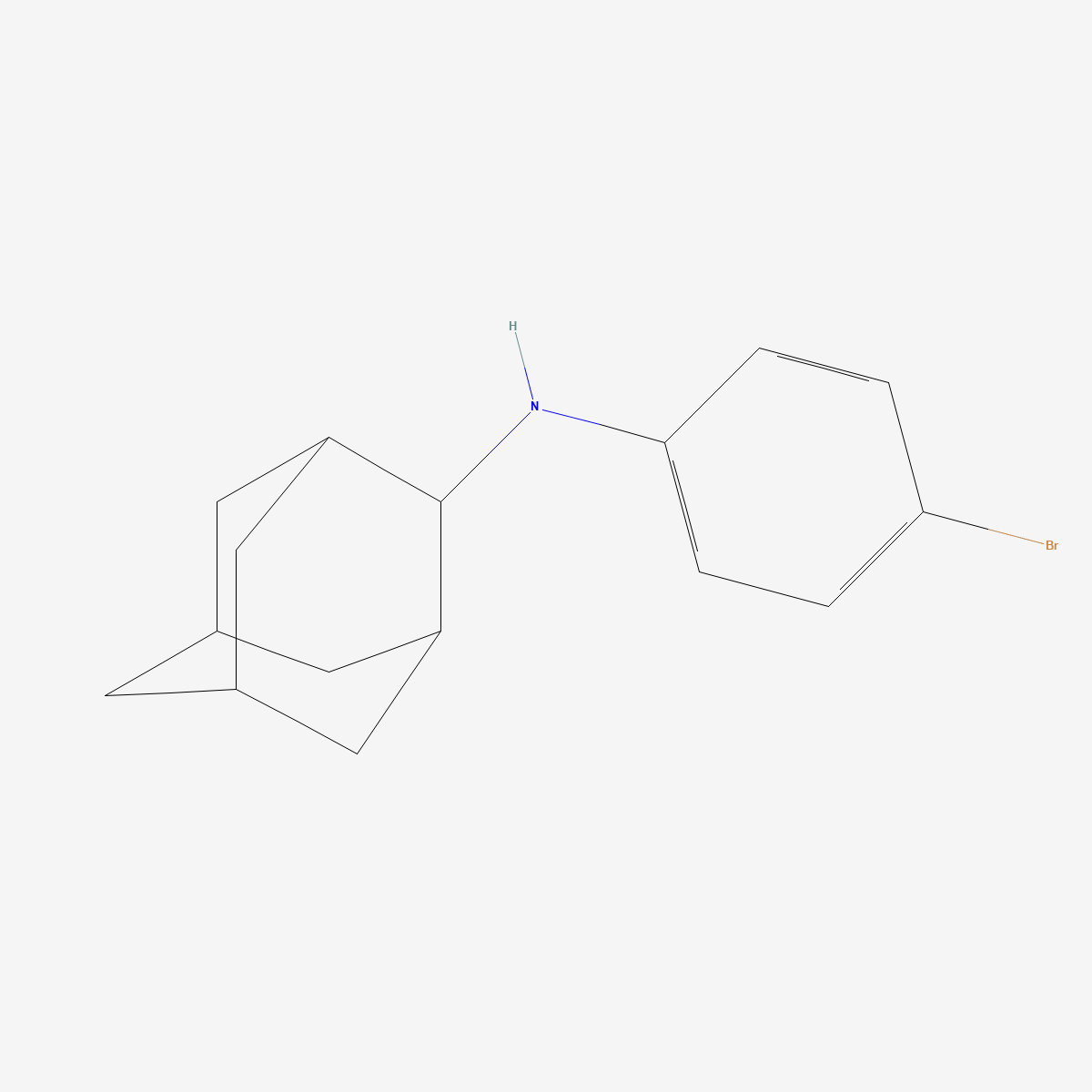
- Identity: bromantane is N-(4-bromophenyl)adamantan-2-amine (CAS 87913-26-6, C16H20BrN, MW 306.24), an adamantane cage bearing a secondary arylamine.
- Physicochemistry: computed partition coefficient around XLogP 5, topological polar surface area 12 Å2, one hydrogen-bond donor — a descriptor profile that predicts passive blood-brain barrier entry and poor aqueous solubility.
- Direct pharmacokinetic evidence: a single indexed study correlating pharmacokinetics with the development of the pharmacological effect, published in Russian in 1995.[1] No metabolite-identification study, no cytochrome P450 phenotyping and no human concentration-time data appear in PubMed.
- Effect duration: a biphasic EEG response with maxima 2–3 and 6–7 hours after dosing and still present at 8 hours,[2] and an effect on physical work capacity described as lasting no less than 24 hours.[3]
- Analytical status: reported in The Lancet in 1997 as a new doping agent,[9] and prohibited in sport since then.
- Status: supplied as a reference standard for laboratory research. Not a medicine and not for human or animal consumption.
What the structure predicts before any study is read
The adamantane cage is the dominant feature. It is a saturated, rigid, three-dimensional hydrocarbon with no polar functionality of its own, and attaching it to a 4-bromophenylamine produces a molecule with almost nothing for water to interact with. The computed descriptors published by PubChem for CID 4660557 make this concrete: a partition coefficient near 5, a topological polar surface area of 12 Å2 and a single hydrogen-bond donor.
Those three numbers are calculated, not measured, and they should be treated as a prediction rather than a result. But the prediction is unambiguous. A molecule with that profile is expected to cross membranes passively, to distribute into lipid-rich tissue including brain, to be poorly soluble in aqueous media, and to depend on oxidative metabolism rather than renal filtration for clearance. Every experimental observation discussed below is consistent with that prediction. None of them measures it.
The one pharmacokinetic study, and what can honestly be said about it
Sergeeva and colleagues published a study in 1995 explicitly addressing the relationship between the pharmacokinetics of bromantane and the time-course of its pharmacological effects.[1] The record is indexed in PubMed with title, authors and journal, but without an English abstract. It is therefore possible to state that the question was studied by that group, in rats, in that year. It is not possible to relay the values they obtained, and this article does not do so.
This is worth stating plainly because secondary sources frequently quote specific half-life figures for bromantane without attribution. Those figures cannot be traced to an indexed primary source. A review of actoprotector pharmacology published in English in 2012 summarises the clinical and preclinical profile of bromantane and bemitil,[10] and is the most accessible entry point to this literature, but a review is not a substitute for the primary measurement.
Effect time-courses as an indirect read-out of exposure
Where concentration data are missing, the shape of the effect over time carries some information. Two observations are unusually specific.
Krapivin and colleagues recorded quantitative pharmaco-EEG from sensorimotor cortex, dorsal hippocampus and lateral hypothalamus of freely behaving rats. They reported reductions in total and absolute power across frequency bands, a fall in relative theta power and a rise in relative beta1,2 activity, and — the point of interest here — a two-phase effect with maxima occurring 2–3 and 6–7 hours after administration, persisting through the full 8 hours of recording.[2] A single-peaked concentration-time curve does not usually produce a double-peaked effect. Enterohepatic recycling, redistribution from a deep lipid compartment, or a metabolite with its own activity would each explain it. No indexed study distinguishes between them.
Separately, Morozov and Kleĭmenova examined physical work capacity in mice and rats across 0.5–50 mg/kg using swimming and treadmill tests, and described the effect as lasting no less than 24 hours — attributing it not only to psychostimulant action but also to a membrane-protective effect, supported by electron-microscopic preservation of cardiomyocyte and skeletal-muscle mitochondria under repeated extreme running loads.[3] A 24-hour functional effect after a single dose is consistent with slow elimination from a lipophilic compound, but a persistent tissue effect can also outlast the compound that caused it.
Regional distribution in brain: a staggered signal
Kudrin and colleagues gave bromantane at 50 mg/kg orally, acutely and chronically, and measured noradrenaline, dopamine, serotonin and their metabolites across brain regions. They reported a significant rise in serotonin and 5-HIAA in the frontal cortex, a delayed rise in subcortical regions, and a stable decrease in the cerebellum.[4]
The temporal stagger between cortical and subcortical structures is the ADME-relevant part. It is, however, a neurochemical measurement and not a tissue-concentration measurement; regional differences in transmitter turnover can arise from circuit-level effects with no difference in local drug exposure at all. The most that can be said is that the compound reaches brain tissue after oral dosing in rats, which the broader pharmacology already requires.
Repeated dosing, accumulation and washout
The clearest indirect evidence about residence time comes from chronic-dosing work by the Volgograd group. In a two-month oral course in rats at 30, 150 and 600 mg/kg, the thermoregulatory effect inverted over time: hypothermia in the initial stage of treatment was replaced by slight hyperthermia in the second month. The authors reported no tolerance to the performance-optimising effect, no behavioural signs of dependence after withdrawal, and full restoration of general physiological and behavioural characteristics within two months of stopping treatment.[7]
An effect that takes weeks to invert and months to wash out is not what a rapidly cleared compound produces. It is equally what a slow adaptive biological response produces. Both readings are open.
The reproductive study by Iezhitsa and colleagues is often read as evidence of placental transfer, and it is worth being precise about why it is not. Female rats were dosed orally at 30, 150 or 600 mg/kg daily for 16 days and were mated after the dosing period ended. Offspring outcomes nevertheless differed from controls, including litter size reduced by 34.9% in the 30 mg/kg group and 44.2% at 600 mg/kg but increased by 45.1% at 150 mg/kg, and passive-avoidance retention latencies increased by 259.0%, 175.3% and 160.7% across the three groups against 1.8% in controls.[8] The dose-response is non-monotonic, which limits mechanistic interpretation, and no concentrations were measured in dams, fetuses or milk. What the design does establish is that exposure ending before conception still altered outcomes — consistent with persistence, but not a measurement of it.
Toxicological dose ranges, and what they bound
Acute toxicity work using Belen’kiĭ and Irwin protocols produced a graphical “dose trajectory” from which therapeutic, toxic and lethal dose levels were derived, and the authors concluded that catecholaminergic effects account for the therapeutic action while cholinergic effects dominate at toxic doses.[6] The width of that separation is itself informative: the broader adamantane programme from which bromantane emerged screened 329 derivatives and singled out this one partly for low toxicity.[5] A wide therapeutic-to-toxic interval usually indicates that exposure is not accumulating steeply with dose, though it does not measure how quickly the compound leaves.
Metabolism and elimination: the genuine gap
No indexed study identifies bromantane metabolites, assigns them to cytochrome P450 isoforms, or reports renal versus biliary recovery. The secondary arylamine and the adamantane cage both offer plausible oxidative sites — N-oxidation or ring hydroxylation on the aromatic ring, and C–H hydroxylation on the cage, which is the dominant route for related adamantanes — but this is structural reasoning, not data.
The analytical literature is similarly thin. Bromantane entered anti-doping practice through a 1997 report in The Lancet announcing it as a new doping agent,[9] and it is listed by the World Anti-Doping Agency as a prohibited substance. Beyond that report, PubMed indexes no method-development or excretion-profile study for bromantane in the analytical toxicology journals where such work normally appears. For comparison, structurally unrelated but pharmacologically adjacent compounds have full urinary excretion profiles with named metabolites and stated limits of detection. Bromantane does not.
Practical notes for laboratory handling
The physicochemical profile that makes the compound interesting also makes it awkward to work with. Aqueous solubility is low and stock solutions are conventionally prepared in DMSO; for any assay in which the readout depends on free concentration, the vehicle fraction should be reported rather than assumed negligible. The secondary aromatic amine and the carbon–bromine bond are the reactive handles: store protected from light and treat prolonged exposure to strong oxidants as a plausible degradation route. Where in-vivo work is planned, the 8-hour and 24-hour effect windows described above are the relevant sampling horizons, not the minutes-to-hours window appropriate to a reuptake inhibitor. The mechanistic reason for that timescale is discussed separately in our article on bromantane’s mechanism of action and the evidence for enzyme induction.
Frequently asked questions
What is the half-life of bromantane?
No half-life value for bromantane can be traced to an indexed primary source. The single pharmacokinetic study in PubMed has no English abstract,[1] and figures circulating in secondary sources are unattributed. The functional data bound the question loosely: EEG changes persist for at least 8 hours in rats[2] and performance effects for at least 24 hours,[3] but effect duration is not the same quantity as elimination half-life.
Does bromantane cross the blood-brain barrier?
The pharmacology requires it — central EEG changes and regional brain monoamine changes follow oral administration in rats[2][4] — and the computed descriptors (high lipophilicity, 12 Å2 polar surface area, one hydrogen-bond donor) are those of a molecule expected to enter passively. No study has measured a brain-to-plasma concentration ratio.
How long is bromantane detectable in a urine sample?
There is no published excretion-profile study establishing a detection window. Detection itself is established: the compound was characterised as a doping agent in 1997[9] and remains prohibited in sport. Anyone designing a detection study should note the absence of published metabolite targets, which means intact-drug monitoring is the only documented approach.
What purity is appropriate for pharmacokinetic reference work?
For quantitative work, and particularly for constructing calibration curves against biological matrices, material characterised at ≥99% with a stated assay method is the practical minimum, since impurities co-eluting with the analyte bias recovery estimates directly. Our bromantane reference standard, assayed at ≥99.75% purity, ships with identity documentation available on request.
Related compounds in our catalogue
Researchers comparing disposition across chemically dissimilar CNS-active compounds frequently work alongside mebicar reference material (CAS 10095-06-4), a highly polar bicyclic urea at the opposite end of the lipophilicity range, and noopept (CAS 157115-85-0), a dipeptide whose pharmacokinetics are dominated by rapid hydrolysis rather than by slow distribution.
References
- Sergeeva SA, Krapivin SV, Losev AS, Morozov IS. Correlated interconnection between pharmacokinetic and dynamic development of the pharmacologic effects of bromantane. Biulleten’ Eksperimental’noi Biologii i Meditsiny. 1995;119(3):305–308. PMID: 7795204
- Krapivin SV, Sergeeva SA, Morozov IS. A quantitative pharmaco-electroencephalographic analysis of the action of bromantane. Biulleten’ Eksperimental’noi Biologii i Meditsiny. 1993;116(11):515–518. PMID: 8312546
- Morozov IS, Kleĭmenova NN. The effect of bromantane on the physical work capacity of laboratory animals. Eksperimental’naia i Klinicheskaia Farmakologiia. 1998;61(6):51–53. PMID: 9929819
- Kudrin VS, Sergeeva SA, Krasnykh LM, Miroshnichenko II, Grekhova TV, Gaĭnetdinov RR. The effect of bromantane on the dopamin- and serotoninergic systems of the rat brain. Eksperimental’naia i Klinicheskaia Farmakologiia. 1995;58(4):8–11. PMID: 7580761
- Morozov IS, Klimova NV, Sergeeva SA, Ivanova IA, Barchukov VG, Kovalev GI, Piatin BM, Avdiunina NI. Adamantane derivatives enhancing body’s resistance to emergencies. Vestnik Rossiĭskoĭ Akademii Meditsinskikh Nauk. 1999;(3):28–32. PMID: 10222828
- Bugaeva LI, Verovskiĭ VE, Iezhitsa IN, Spasov AA. An acute toxicity study of bromantane. Eksperimental’naia i Klinicheskaia Farmakologiia. 2000;63(1):57–61. PMID: 10763112
- Iëzhitsa IN, Bugaeva LI, Spasov AA, Morozov IS. Effect of bromantane on the rat neurologic status in two month course. Eksperimental’naia i Klinicheskaia Farmakologiia. 2000;63(5):13–17. PMID: 11109517
- Iezhitsa IN, Spasov AA, Bugaeva LI. Effects of bromantan on offspring maturation and development of reflexes. Neurotoxicology and Teratology. 2001;23(2):213–222. doi:10.1016/s0892-0362(01)00119-2
- Burnat P, Payen A, Le Brumant-Payen C, Hugon M, Ceppa F. Bromontan, a new doping agent. The Lancet. 1997;350(9082):963–964. doi:10.1016/s0140-6736(05)63310-7
- Oliynyk S, Oh S. The pharmacology of actoprotectors: practical application for improvement of mental and physical performance. Biomolecules & Therapeutics. 2012;20(5):446–456. doi:10.4062/biomolther.2012.20.5.446
Research use only. The compounds discussed are supplied as reference standards for laboratory research. They are not medicines, not dietary supplements, and are not for human or animal consumption. Nothing in this article is medical advice or a recommendation for use in humans. Any quantities mentioned are those reported in the published studies cited above and appear solely to describe that research accurately.