Forty years of work on oxiracetam has not produced a receptor. The indexed literature contains no characterised binding site, no identified target protein and no displacement assay for this compound. What exists instead is a set of reproducible downstream observations — preservation of brain acetylcholine under conditions that deplete it, a translocation of protein kinase C that appears only in learning-impaired animals, a regional accumulation in septum and hippocampus, and a release effect that vanishes when you move from brain slices to isolated nerve terminals. Read together, those constraints say something fairly specific about where the mechanism is not.
Key points
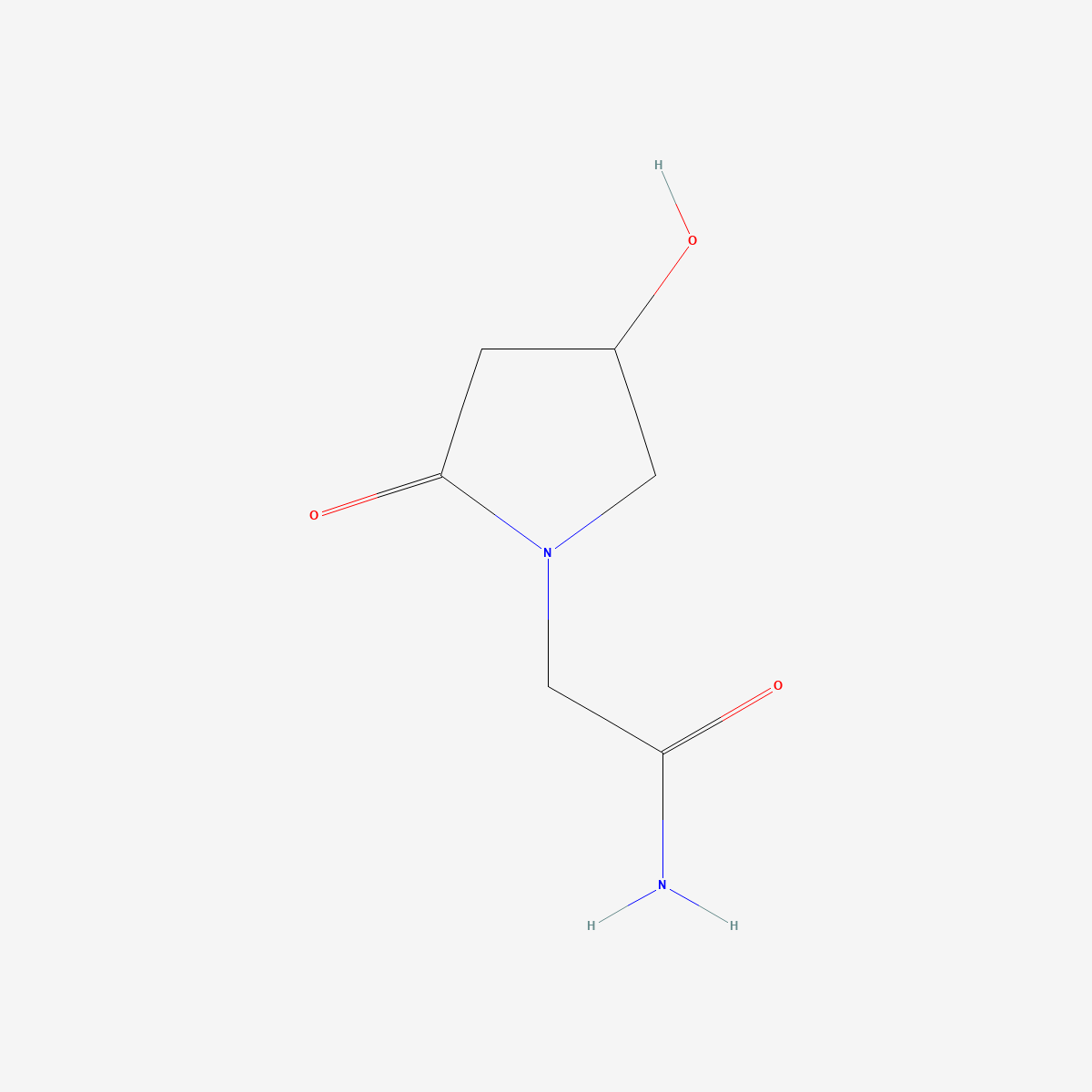
- Identity: oxiracetam is 2-(4-hydroxy-2-oxopyrrolidin-1-yl)acetamide (CAS 62613-82-5, C6H10N2O3, MW 158.16) — piracetam bearing a hydroxyl at the 4-position, which introduces a single stereocentre.
- No identified target: no receptor, transporter or enzyme has been established as the binding partner. The mechanism is described entirely through downstream effects.
- Brain entry despite high polarity: computed partition coefficient −2.2 and polar surface area 83.6 Å2, yet 14C-labelled compound is recovered unmetabolised from brain, concentrated in septum and hippocampus.[1]
- Cholinergic effect: prevents the fall in cortical and hippocampal acetylcholine caused by electroshock[2] and by scopolamine,[3] with an inverted-U dose-response in both studies.
- Human disposition: mean half-life 7.7 hours in healthy non-geriatric subjects and 12.3 hours in elderly patients, with AUC doubled and volume of distribution unchanged — a renal elimination signature.[7]
- Status: supplied as a reference standard for laboratory research. Not a medicine and not for human or animal consumption.
A very polar molecule that nonetheless gets into brain
The physicochemistry argues against brain entry. With a computed partition coefficient of −2.2, a topological polar surface area of 83.6 Å2 and two hydrogen-bond donors, oxiracetam looks like a molecule that should stay in the plasma compartment and be filtered out. It does not.
Ponzio and colleagues administered 14C-labelled oxiracetam to rats at 200 mg/kg orally or 100 mg/kg intra-arterially and recovered it from brain unmetabolised. The distribution was not uniform: the largest amount appeared in septum, followed by hippocampus, with smaller amounts in cerebral cortex and striatum. Administering the labelled compound directly into the lateral ventricles produced the same regional pattern, establishing that the tropism for those structures does not depend on route of administration. The same study delivered the estimated brain-reaching quantities from systemically active doses — 1.9 to 19 nmol per rat — through an implanted cannula into the lateral ventricles of conscious freely moving animals, and showed dose-dependent antagonism of amnesia induced by scopolamine at 0.66 mg/kg subcutaneously.[1]
That last design is stronger than it first appears. It does not merely show that the compound reaches brain; it shows that the amount reaching brain is by itself sufficient to produce the behavioural effect, which rules out an exclusively peripheral mechanism.
The cholinergic evidence, and its inverted-U
Two studies from the Florence group define this line of work. In the first, electroconvulsive shock reduced acetylcholine by 46% in hippocampus and 39% in cerebral cortex one minute after application, with the hippocampal deficit still significant at 30 minutes, and disrupted acquisition of a step-down passive avoidance response. Oxiracetam at 100 and 300 mg/kg intraperitoneally, given 90 minutes before training, prevented the acetylcholine decrease dose-dependently and prevented the behavioural disruption. At 300 mg/kg the acetylcholine level one minute after shock was significantly higher than in sham-treated animals. Piracetam at the same doses was inactive.[2]
The second used a pharmacological rather than electrical insult. Scopolamine at 0.63 mg/kg produced acetylcholine decreases of 64%, 56% and 42% in cortex, hippocampus and striatum and blocked passive avoidance acquisition. Oxiracetam at 50 and 100 mg/kg, given 30 minutes before scopolamine, reduced both the amnesia and the acetylcholine decrease in cortex and hippocampus but not in striatum. Critically, both lower and higher doses were ineffective. Aniracetam at 100 mg/kg orally also prevented the amnesia but attenuated the acetylcholine decrease in hippocampus only, and at 300 mg/kg it reduced the acetylcholine decrease while failing to prevent the amnesia.[3]
The authors’ own conclusion is the honest one and deserves quoting in substance: oxiracetam and aniracetam exert a stimulatory effect on specific central cholinergic pathways, but a direct relationship between cognition-enhancing properties and cholinergic activation needs further confirmation. The dissociation they observed with aniracetam at 300 mg/kg — transmitter effect present, behavioural effect absent — is precisely why.
A release experiment that localises the mechanism
Raiteri and colleagues ran the experiment that most sharply constrains where in the synapse this is happening. In superfused rat hippocampal slices they measured potassium-evoked overflow of labelled D-aspartate, acetylcholine, GABA, noradrenaline and serotonin. Overflow of D-aspartate — a non-metabolised glutamate analogue — was enhanced by oxiracetam at 0.01 to 1 µM but not at 10 to 100 µM, which instead tended to inhibit it. Acetylcholine overflow increased at the same low concentrations, less effectively. GABA, noradrenaline and serotonin overflow were unaffected at concentrations active on the other two.[4]
Then the decisive control: none of these effects could be reproduced in hippocampal synaptosomes. Synaptosomes are resealed nerve terminals; if the drug acted on a receptor or channel located on the releasing terminal itself, the effect should survive the preparation. It did not. The authors concluded that oxiracetam increases glutamate and acetylcholine release by a mechanism not sited in the releasing nerve terminals — which implicates a circuit-level or glial interaction preserved in slices and lost in synaptosomes.
Note also that the active range here is 0.01–1 µM, three orders of magnitude below the concentrations at which aniracetam modulates AMPA receptors, and that higher concentrations reverse the effect. The inverted-U appears again.
Second messengers: protein kinase C, and only in impaired animals
Fordyce and colleagues treated C57BL/6Ibg and DBA/2Ibg mice with oxiracetam at 50 mg/kg intraperitoneally daily for nine days and tested them on a modified Morris water maze and contextual fear conditioning, measuring hippocampal protein kinase C in cytosolic, loosely-bound and membrane-bound fractions. The learning-impaired DBA strain showed significantly improved spatial learning and improved contextual learning, and the improvement correlated with an increase in membrane-bound protein kinase C. Swim speed and freezing ability were unchanged, ruling out a motor explanation. In the C57 strain — not learning-impaired — there was no improvement on either task and no change in hippocampal protein kinase C activity at all.[5]
This is the clearest instance of a pattern that runs through the whole oxiracetam literature. The compound does something measurable where there is a deficit and nothing measurable where there is not. Membrane translocation of protein kinase C is the canonical activated state of that enzyme, so the finding is mechanistically meaningful rather than merely correlational — but it is downstream, and nothing identifies what oxiracetam bound to in order to produce it.
The single-enantiomer work
The 4-hydroxyl makes C-4 a stereocentre, and recent work has used the resolved S-enantiomer rather than the compound with unspecified stereochemistry. Fan and colleagues used middle cerebral artery occlusion with reperfusion in rats and reported that S-oxiracetam improved spatial learning, reduced tissue loss and reduced hippocampal neuronal apoptosis, with restoration of synaptophysin function and increased PSD95 expression in hippocampus. The cognitive effects were blocked by methyllycaconitine, an α7 nicotinic acetylcholine receptor antagonist, and by LY294002, a phosphoinositide 3-kinase inhibitor, leading the authors to place both in the mediating pathway.[6]
The α7 nicotinic result is the closest anything in this literature comes to naming a receptor, and it should be read carefully: an antagonist that abolishes an effect establishes that the receptor is required for the effect, not that the compound binds it. It also concerns one enantiomer in one injury model, and material identified simply by CAS 62613-82-5 carries no stereochemical specification.
Human pharmacokinetics and a divided clinical record
Lecaillon and colleagues studied eighteen elderly patients and six healthy non-geriatric adults. The elderly group received 800 mg orally on day one and then every 12 hours from day 2 to day 10; the healthy group received a single 800 mg dose. In healthy subjects, dose-normalised plasma levels at 800 mg matched those previously recorded at 2000 mg, indicating no non-linearity across that range. In the elderly, AUC after a single dose was roughly double that of healthy subjects while Cmax was almost unchanged and slightly delayed — the signature of slower absorption combined with slower elimination. Mean half-life was 12.3 hours in the elderly against 7.7 hours in healthy subjects, which the authors attributed to physiological decline in renal function, and volume of distribution was not significantly altered.[7] Combined with recovery of unmetabolised compound from brain tissue,[1] this describes a metabolically stable, renally cleared molecule.
The clinical trial record does not converge. Bottini and colleagues ran a multicentre double-blind study of 800 mg twice daily against placebo for 12 weeks in 65 patients with primary degenerative, multi-infarct or mixed dementia, of whom 58 completed. They reported a significant difference favouring oxiracetam on a quality-of-life scale at p < 0.01, with Bonferroni-corrected differences on some but not all neuropsychological tests — controlled associations and short story among them.[8] In the same year Green and colleagues enrolled 24 carefully assessed patients with probable Alzheimer’s disease in a double-blind placebo-controlled study and reported that a broad neuropsychological battery failed to show improvement in the treated group or in any individual treated patient, concluding that oxiracetam is ineffective in reducing cognitive impairment due to Alzheimer’s disease.[9]
These are not straightforwardly contradictory: the populations differ, one is mixed-aetiology dementia and the other is probable Alzheimer’s, and both are small. But the honest reading is that a positive finding on a quality-of-life scale in mixed dementia and a flat neuropsychological battery in Alzheimer’s disease do not add up to a demonstrated cognitive effect.
Interest has not stopped. Lim and colleagues published the design of a multicentre randomised double-blind placebo-controlled phase IV trial in which 500 patients with post-stroke cognitive complaints received 800 mg of oxiracetam or placebo twice daily for 36 weeks, with co-primary endpoints of change in Mini-Mental State Examination and Clinical Dementia Rating-Sum of Boxes, plus resting-state functional MRI and actigraphy. Enrolment began in February 2018 and final follow-up completed in September 2022.[10] That publication reports the protocol, not the outcome, and no result should be inferred from it.
Practical notes for laboratory handling
Oxiracetam is at the opposite end of the physicochemical range from most CNS-active compounds: highly water-soluble, two hydrogen-bond donors, and metabolically stable enough to be recovered intact from brain tissue.[1] That stability simplifies analytical work but removes the usual metabolite-based confirmation routes, so identity confirmation rests on direct spectroscopic characterisation. Two design points follow from the pharmacology above. First, the stereocentre at C-4 means that enantiomeric composition is a real experimental variable where the single-enantiomer literature is being replicated; chiral analysis is not optional in that case. Second, the inverted-U dose-responses reported in both the slice work[4] and the scopolamine study[3] mean that a single concentration is not an adequate test — a negative result at one concentration carries almost no information about the compound.
Frequently asked questions
Does oxiracetam have a known receptor target?
No. No binding site for oxiracetam has been characterised in the indexed literature, and the mechanistic work describes only downstream consequences — transmitter preservation, release modulation, kinase translocation. The closest indication comes from an antagonist experiment in which blocking the α7 nicotinic acetylcholine receptor abolished the effect of the S-enantiomer in a stroke model[6] — which shows the receptor is required downstream, not that the compound binds it.
How does oxiracetam differ from piracetam?
Structurally by a single hydroxyl group at the 4-position of the pyrrolidinone ring, which also creates a stereocentre that piracetam does not have. Functionally, the difference is not merely nominal: in the electroshock study, oxiracetam at 100 and 300 mg/kg prevented both the acetylcholine depletion and the behavioural disruption, while piracetam at the same doses was inactive.[2]
How is oxiracetam eliminated?
Renally, and essentially unchanged. It is recovered unmetabolised from brain tissue,[1] and in humans the half-life lengthens from 7.7 to 12.3 hours in elderly patients with AUC doubled and volume of distribution unaltered — the pattern expected when clearance depends on renal function rather than on hepatic metabolism.[7]
What purity is appropriate for a reference standard?
For analytical and quantitative work, material characterised at ≥99% with a stated assay method is the practical minimum, and where the single-enantiomer literature is being replicated the enantiomeric composition should be determined rather than assumed. Our oxiracetam reference standard (CAS 62613-82-5) ships with identity documentation available on request.
Related compounds in our catalogue
Researchers comparing pyrrolidinone derivatives across the polarity range commonly work alongside aniracetam reference material (CAS 72432-10-1), which acts on AMPA receptor desensitisation and was tested head-to-head with oxiracetam in the scopolamine study described above, and pramiracetam (CAS 68497-62-1), which carries a basic di(propan-2-yl)aminoethyl side chain on the same 2-oxopyrrolidine core.
References
- Ponzio F, Pozzi O, Banfi S, Dorigotti L. Brain entry and direct central pharmacological effects of the nootropic drug oxiracetam. Pharmacopsychiatry. 1989;22(Suppl 2):111–115. doi:10.1055/s-2007-1014629
- Spignoli G, Pepeu G. Oxiracetam prevents electroshock-induced decrease in brain acetylcholine and amnesia. European Journal of Pharmacology. 1986;126(3):253–257. doi:10.1016/0014-2999(86)90055-5
- Spignoli G, Pepeu G. Interactions between oxiracetam, aniracetam and scopolamine on behavior and brain acetylcholine. Pharmacology, Biochemistry, and Behavior. 1987;27(3):491–495. doi:10.1016/0091-3057(87)90353-4
- Raiteri M, Costa R, Marchi M. Effects of oxiracetam on neurotransmitter release from rat hippocampus slices and synaptosomes. Neuroscience Letters. 1992;145(1):109–113. doi:10.1016/0304-3940(92)90215-s
- Fordyce DE, Clark VJ, Paylor R, Wehner JM. Enhancement of hippocampally-mediated learning and protein kinase C activity by oxiracetam in learning-impaired DBA/2 mice. Brain Research. 1995;672(1–2):170–176. doi:10.1016/0006-8993(94)01389-y
- Fan W, Zhang Y, Li X, Xu C. S-oxiracetam Facilitates Cognitive Restoration after Ischemic Stroke by Activating α7nAChR and the PI3K-Mediated Pathway. Neurochemical Research. 2021;46(4):888–904. doi:10.1007/s11064-021-03233-0
- Lecaillon JB, Dubois JP, Coppens H, Darragon T, Theobald W, Reumond G, Beck H. Pharmacokinetics of oxiracetam in elderly patients after 800 mg oral doses, comparison with non-geriatric healthy subjects. European Journal of Drug Metabolism and Pharmacokinetics. 1990;15(3):223–230. doi:10.1007/BF03190208
- Bottini G, Vallar G, Cappa S, Monza GC, Scarpini E, Baron P, Cheldi A, Scarlato G. Oxiracetam in dementia: a double-blind, placebo-controlled study. Acta Neurologica Scandinavica. 1992;86(3):237–241. doi:10.1111/j.1600-0404.1992.tb05077.x
- Green RC, Goldstein FC, Auchus AP, Presley R, Clark WS, Van Tuyl L, Green J, Hersch SM, Karp HR. Treatment trial of oxiracetam in Alzheimer’s disease. Archives of Neurology. 1992;49(11):1135–1136. doi:10.1001/archneur.1992.00530350049018
- Lim JS, Lee J, Kang Y, Park HT, Kim DE, Cha JK, et al. Efficacy and safety of oxiracetam in patients with vascular cognitive impairment: A multicenter, randomized, double-blinded, placebo-controlled, phase IV clinical trial. Contemporary Clinical Trials. 2023;126:107108. doi:10.1016/j.cct.2023.107108
Research use only. The compounds discussed are supplied as reference standards for laboratory research. They are not medicines, not dietary supplements, and are not for human or animal consumption. Nothing in this article is medical advice or a recommendation for use in humans. Any quantities mentioned are those reported in the published studies cited above and appear solely to describe that research accurately.