Aniracetam has AMPA receptors. Levetiracetam has SV2A. Pramiracetam, forty years after its selection as CI-879, still has no assigned molecular target. What it does have is one reproducible biochemical signature that its closest relatives do not share: an increase in sodium-dependent high-affinity choline uptake in hippocampal synaptosomes, visible only across a narrow band of doses. Almost everything else that is interesting about this compound — the inverted U-shaped dose-response, the failed dementia trial, the strange dependence on intact adrenal function — follows from that narrowness.
Key points
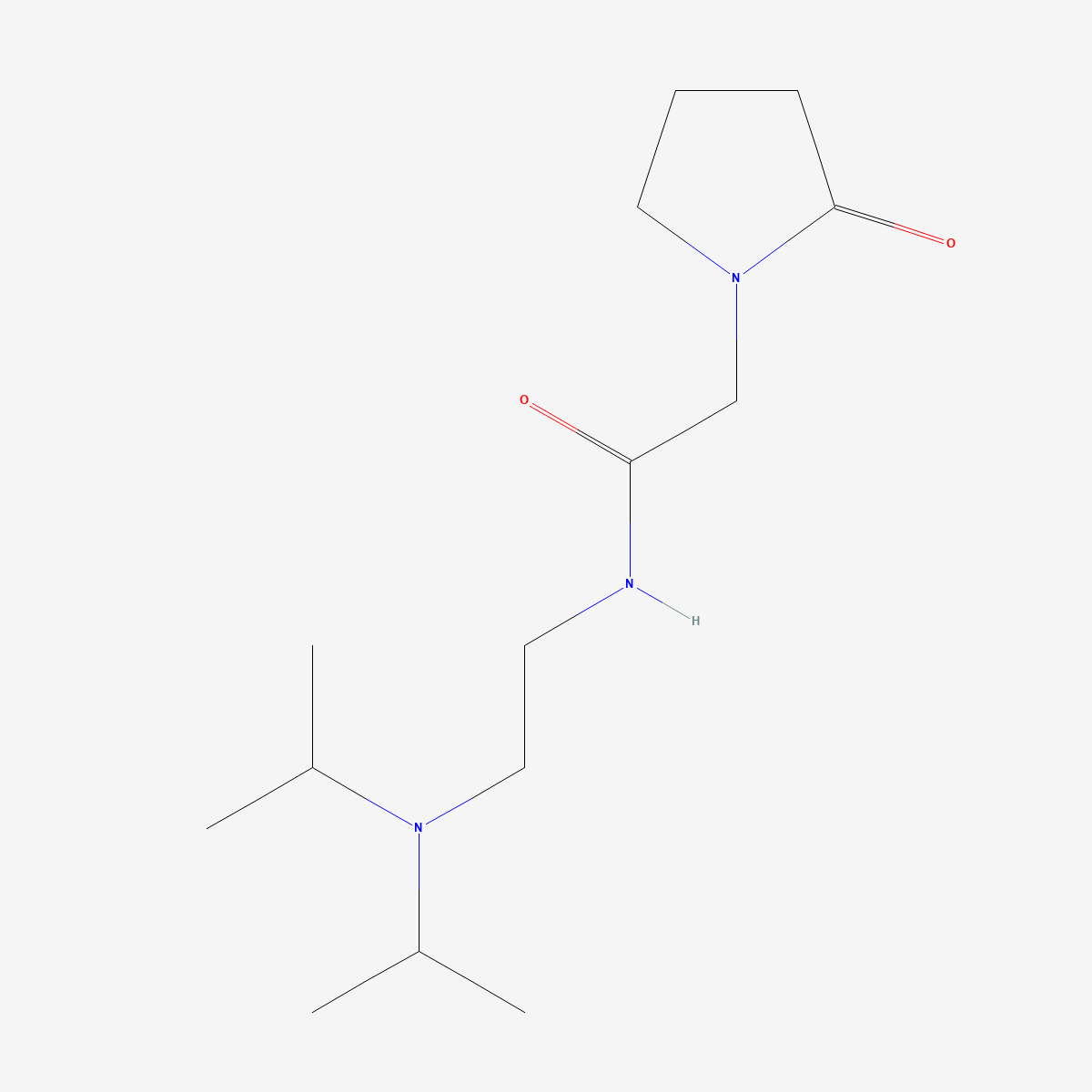
- Structure: N-[2-[di(propan-2-yl)amino]ethyl]-2-(2-oxopyrrolidin-1-yl)acetamide (CAS 68497-62-1, C14H27N3O2, MW 269.38) — a 2-oxopyrrolidine acetamide carrying a strongly basic diisopropylaminoethyl side chain.
- Distinguishing biochemistry: pramiracetam raised high-affinity choline uptake into rat hippocampal synaptosomes at 44 and 88 mg/kg i.p., while piracetam, aniracetam, lysine vasopressin and 4-aminopyridine were inactive in the same assay.[2]
- Dose-response: an inverted U was present in the series from the first structure–activity paper and was later demonstrated simultaneously in learned behaviour, cortical and hippocampal EEG, and single hippocampal neuron firing rates.[1][3]
- Adrenal dependency: inhibition of steroid biosynthesis and blockade of aldosterone receptors abolish the memory-improving effect of piracetam-like compounds, pramiracetam included — while leaving cholinomimetics unaffected.[6]
- Clinical record: mixed and small. A double-blind study in brain-injured males reported improved delayed recall; an enrichment-design trial in ten probable Alzheimer’s patients failed to replicate its own dose-finding phase.[9][10]
- Status: supplied as a reference standard for laboratory research. Not a medicine and not for human or animal consumption.
A pyrrolidinone with a basic tail
Pramiracetam was not stumbled upon; it was selected. Butler and colleagues synthesised a series of N-[(dialkylamino)alkyl]-2-oxo-1-pyrrolidineacetamides and screened them for reversal of electroconvulsive-shock-induced amnesia in mice, with the compounds given after the shock rather than before it. Two structural findings came out of that work. The N-(dialkylamino) substituent markedly enhanced amnesia-reversal activity, with an ethylene linker giving the optimal chain length; and the active compounds exhibited an inverted U-shaped dose-response curve. The molecule chosen for preclinical toxicological evaluation on the strength of both its potency and the breadth of its dose-response curve received the investigational number CI-879 and the adopted name pramiracetam.[1]
That basic side chain is what separates pramiracetam from piracetam chemically and practically. Piracetam is a neutral, highly water-soluble small molecule; pramiracetam carries a diisopropylamino group that is protonated across the whole physiological range, and it is normally isolated as a salt. The crystal structure reported for that salt describes the arrangement directly — a diisopropyl-substituted ammonium cation paired with hydrogen sulfate.[11] This is not a pedantic point. Nearly all published human work used pramiracetam sulfate, and the sulfate (C14H29N3O6S, MW 367.46) is only about 73% free base by mass.
The choline uptake signal
Shih and Pugsley compared seven compounds reported to enhance cognition, measuring sodium-dependent high-affinity choline uptake (HACU) into rat hippocampal synaptosomes thirty minutes after in vivo administration. HACU is the rate-limiting step in acetylcholine synthesis and is used as a biochemical proxy for cholinergic neuronal activity. Pramiracetam raised HACU at 44 and 88 mg/kg i.p., with both higher and lower doses ineffective. 3,4-Diaminopyridine did the same at 0.1 mg/kg; centrophenoxine at 100 mg/kg lowered HACU; piracetam at 100 and 500 mg/kg, aniracetam at 10–200 mg/kg orally, lysine vasopressin and 4-aminopyridine produced no effect at all.[2]
That comparison is the single most informative result in the pramiracetam literature, and it is worth reading precisely. It is not a demonstration that pramiracetam acts on cholinergic neurons; it is a demonstration that pramiracetam does something in this assay that two other racetams do not. A separate line of work found that fourteen days of scopolamine treatment altered choline transport across the blood–brain barrier in rats, and that co-injection of either piracetam or pramiracetam at 100 mg/kg/day prevented the change while also raising cerebral blood flow, with regional differences in both measures.[5] Choline handling keeps reappearing. A receptor does not.
Why the inverted U is a design constraint, not a nuisance
Poschel and colleagues demonstrated the therapeutic window at three levels of analysis at once — learned behaviour, gross EEG activity in frontal cortex and hippocampus, and the firing rate of individual hippocampal neurons — after both oral and intravenous administration.[3] A window that survives from whole-animal behaviour down to single-unit recording is a property of the compound rather than an artefact of one assay.
The practical consequence is severe and routinely ignored. A null result obtained at a single dose tells you very little about this compound. In a radial-arm-maze study, 7.5 and 15 mg/kg administered daily for seven weeks significantly improved the reference-memory component of a sixteen-arm task with nine arms baited, but did not significantly affect the working-memory component — a dissociation, not a global effect.[4] Anyone designing an experiment around pramiracetam needs a dose–response series, not a dose.
An adrenal requirement nobody predicted
The oddest thread in this literature came out of the pharmaceutical research department at CIBA-GEIGY. Adrenalectomy abolishes the memory-enhancing effects of piracetam and of its derivatives oxiracetam, aniracetam and pramiracetam. Mondadori and colleagues asked whether endogenous steroids were therefore part of the mechanism, and showed that inhibiting steroid biosynthesis with aminoglutethimide, or blocking aldosterone receptors with epoxymexrenone, completely suppressed the memory-improving effects of the nootropics. The same blockade did not block the effects of cholinomimetics on memory, which the authors read as indicating a separate mechanism for that drug class.[6]
Whatever this family of compounds does, part of it appears to be permissive rather than direct: it requires an intact mineralocorticoid-receptor signal in order to be expressed at all. That is a strong argument against expecting a clean readout in reduced preparations, and a plausible contributor to the inconsistency of the behavioural literature, since corticosteroid status varies with handling, time of day and stress in ways that behavioural protocols rarely control.
Nitric oxide synthase, and the limits of a single number
One study examined neuronal nitric oxide synthase in rats. At 300 mg/kg i.p., pramiracetam produced an approximately 20% increase in NOS activity in cortical homogenates but not in hippocampal homogenates, with no significant change in NOS mRNA expression in either region; 100 mg/kg was ineffective on both measures. In animals pretreated 24 hours earlier with lithium chloride at 3 mEq/kg, the same 300 mg/kg dose yielded a 40% increase in cortical NOS activity, again without an mRNA change, while lithium chloride alone produced no effect.[7]
Enzyme activity moving while message does not is consistent with post-translational regulation rather than induction. It is also a single report, at a dose roughly an order of magnitude above the one that moved choline uptake, and it has not been independently replicated. It belongs in an honest summary of the evidence. It does not belong in a mechanism diagram.
What the human studies reported
Pharmacokinetics are the least contested part of the record. In normal male volunteers given single 400, 800, 1200 and 1600 mg oral doses in a double-blind, randomised design, mean peak plasma concentrations ranged from 2.71 ± 0.54 to 8.98 ± 0.71 µg/mL and were reached two to three hours after dosing. Harmonic mean elimination half-life was 4.5–6.5 hours and mean total body clearance 4.45–4.85 mL/min/kg, both independent of dose, while peak concentration and area under the curve increased linearly with dose.[8] Plasma assay methodology for the compound goes back to a nitrogen-specific gas chromatographic method published in 1983.[12]
Efficacy is another matter. A double-blind, placebo-controlled study of 400 mg pramiracetam sulfate three times daily in males with memory and cognitive problems resulting from head injury and anoxia reported clinically significant improvement in memory measures, particularly delayed recall, maintained through an 18-month open-trial period and a one-month follow-up after discontinuation.[9] Against that, a two-phase, placebo-controlled enrichment-design trial in ten patients with probable Alzheimer’s disease found a best dose for eight patients in the dose-finding phase, but only two of those improved to a similar degree in the replication phase; fluorodeoxyglucose PET in two individuals showed no definite change, and the authors concluded that doses up to 4000 mg were unlikely to confer symptomatic benefit.[10] In healthy volunteers, ten days of oral treatment partially reduced the amnesic effect of an intramuscular scopolamine challenge in two groups of twelve males aged 18–42 and 55–65.[13]
A systematic survey of piracetam-like drugs published fifteen years later placed pramiracetam in the first subgroup alongside piracetam, oxiracetam, aniracetam and phenylpiracetam, noted reports of improvement in cognitive deficits associated with traumatic brain injury, and stated plainly that the modes of action of piracetam and most of its derivatives remain an enigma.[14] That assessment has not been overturned since.
Frequently asked questions
Does pramiracetam act on AMPA receptors like aniracetam?
There is no published evidence that it does. The AMPA-modulating account belongs to aniracetam and to compounds explicitly designed as ampakines. Pramiracetam’s distinguishing result in a direct side-by-side comparison was an increase in high-affinity choline uptake in an assay where aniracetam was inactive across a twenty-fold oral dose range.[2] Treating the racetams as a single pharmacological class is a modelling shortcut that the primary literature does not support.
Why do the animal and human dosing figures differ so much?
Because they were chosen to answer different questions. The rodent work that produced mechanistic signals used single intraperitoneal doses in the tens of mg/kg, selected to sit inside a narrow window. The human studies used fixed oral doses of a salt, selected for tolerability rather than to probe a window, and the largest of them concluded that even 4000 mg was unlikely to help.[10] None of these figures transfer between species or routes, and none of them are recommendations.
Is pramiracetam sulfate the same material as pramiracetam?
It is the 1:1 hydrogen sulfate salt of the same cation, and it is the form most published human work used. For gravimetric work the distinction matters: the free base is MW 269.38 and the sulfate is MW 367.46, so a weighed portion of the sulfate delivers roughly 73% of that mass as free base. Check which form a certificate of analysis refers to before calculating a concentration.
What documentation should a pramiracetam reference standard carry?
For analytical work, the practical minimum is a purity figure with the assay method stated next to it, an explicit statement of salt form, and identity data you can verify independently. Our pramiracetam reference standard (CAS 68497-62-1) ships with identity documentation available on request. Where a compound has a far thinner published record than this one, documentation has to carry more weight still — a point we work through in our note on confirming sunifiram’s identity against a fourteen-paper literature.
Related compounds in our catalogue
Researchers comparing mechanisms across the pyrrolidinone series most often work alongside aniracetam reference material (CAS 72432-10-1), which was the informative inactive comparator in the choline uptake experiment described above, and oxiracetam (CAS 62613-82-5), which shares the adrenalectomy sensitivity that defines this class.
References
- Butler DE, Nordin IC, L’Italien YJ, Zweisler L, Poschel PH, Marriott JG. Amnesia-reversal activity of a series of N-[(disubstituted-amino)alkyl]-2-oxo-1-pyrrolidineacetamides, including pramiracetam. Journal of Medicinal Chemistry. 1984;27(5):684–691. doi:10.1021/jm00371a023
- Shih YH, Pugsley TA. The effects of various cognition-enhancing drugs on in vitro rat hippocampal synaptosomal sodium dependent high affinity choline uptake. Life Sciences. 1985;36(22):2145–2152. doi:10.1016/0024-3205(85)90311-x
- Poschel BP, Ho PM, Ninteman FW, Callahan MJ. Pharmacologic therapeutic window of pramiracetam demonstrated in behavior, EEG, and single neuron firing rates. Experientia. 1985;41(9):1153–1156. doi:10.1007/BF01951704
- Murray CL, Fibiger HC. The effect of pramiracetam (CI-879) on the acquisition of a radial arm maze task. Psychopharmacology (Berl). 1986;89(3):378–381. doi:10.1007/BF00174378
- Brust P. Reversal of scopolamine-induced alterations of choline transport across the blood-brain barrier by the nootropics piracetam and pramiracetam. Arzneimittelforschung. 1989;39(10):1220–1222. PMID: 2610714
- Mondadori C, Bhatnagar A, Borkowski J, Häusler A. Involvement of a steroidal component in the mechanism of action of piracetam-like nootropics. Brain Research. 1990;506(1):101–108. doi:10.1016/0006-8993(90)91204-t
- Corasaniti MT, Paoletti AM, Palma E, Granato T, Navarra M, Nisticò G. Systemic administration of pramiracetam increases nitric oxide synthase activity in the cerebral cortex of the rat. Functional Neurology. 1995;10(3):151–155. PMID: 8557218
- Chang T, Young RM, Goulet JR, Yakatan GJ. Pharmacokinetics of oral pramiracetam in normal volunteers. Journal of Clinical Pharmacology. 1985;25(4):291–295. doi:10.1002/j.1552-4604.1985.tb02841.x
- McLean A Jr, Cardenas DD, Burgess D, Gamzu E. Placebo-controlled study of pramiracetam in young males with memory and cognitive problems resulting from head injury and anoxia. Brain Injury. 1991;5(4):375–380. doi:10.3109/02699059109008110
- Claus JJ, Ludwig C, Mohr E, Giuffra M, Blin J, Chase TN. Nootropic drugs in Alzheimer’s disease: symptomatic treatment with pramiracetam. Neurology. 1991;41(4):570–574. doi:10.1212/wnl.41.4.570
- Bambagiotti-Alberti M, Bartolucci G, Bruni B, Coran SA, Di Vaira M. Diisopropyl{2-[2-(2-oxopyrrolidin-1-yl)acetamido]ethyl}ammonium hydrogen sulfate. Acta Crystallographica Section E: Structure Reports Online. 2008;64(Pt 6):o1160. doi:10.1107/S1600536808015341
- Chang T, Young RM. Gas chromatographic assay of pramiracetam in human plasma using nitrogen specific detection. Journal of Chromatography. 1983;274:346–349. doi:10.1016/s0378-4347(00)84441-2
- Mauri M, Sinforiani E, Reverberi F, Merlo P, Bono G. Pramiracetam effects on scopolamine-induced amnesia in healthy volunteers. Archives of Gerontology and Geriatrics. 1994;18(2):133–139. doi:10.1016/0167-4943(94)00542-7
- Malykh AG, Sadaie MR. Piracetam and piracetam-like drugs: from basic science to novel clinical applications to CNS disorders. Drugs. 2010;70(3):287–312. doi:10.2165/11319230-000000000-00000
Research use only. The compounds discussed are supplied as reference standards for laboratory research. They are not medicines, not dietary supplements, and are not for human or animal consumption. Nothing in this article is medical advice or a recommendation for use in humans. Any quantities mentioned are those reported in the published studies cited above and appear solely to describe that research accurately.