A PubMed search for “sunifiram” run on 21 September 2026 returns sixteen records. Two of them are a paper retracted in 2026 and the retraction statement itself. Of the fourteen that remain, twelve come from one laboratory in Florence and two from one laboratory in Sendai. Four are primary experiments in which sunifiram itself, rather than an analogue in a synthetic series, is the compound under test. That is the whole published record for a molecule sold worldwide, and it is why the first serious question about a sunifiram sample is analytical rather than pharmacological: with a literature this shallow, a mislabelled bottle has almost nothing to fail against.
Key points
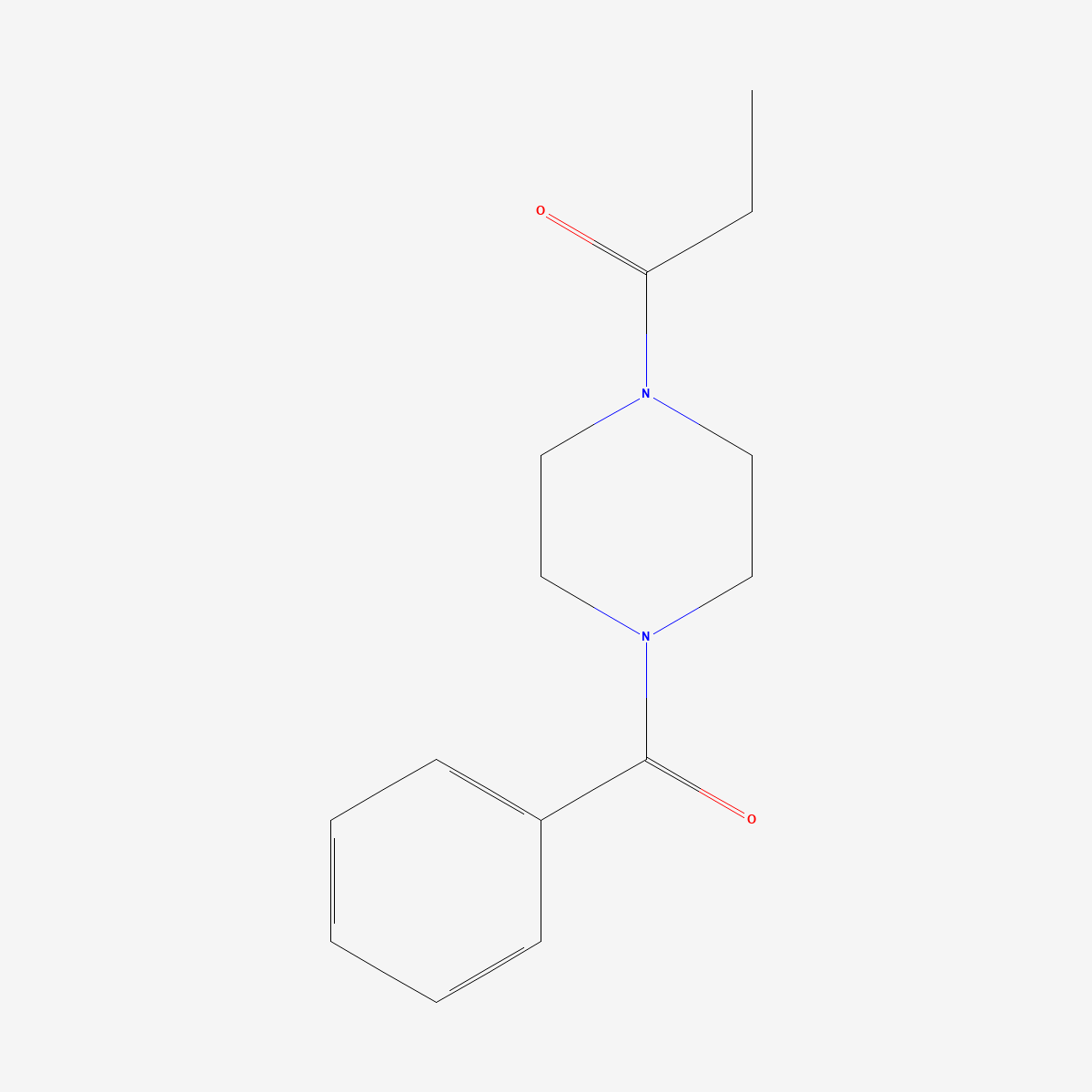
- Structure: 1-(4-benzoylpiperazin-1-yl)propan-1-one, also designated DM235 (CAS 314728-85-3, C14H18N2O2, MW 246.30, monoisotopic mass 246.1368) — a piperazine benzoylated on one nitrogen and propanoylated on the other.
- Literature depth, counted rather than asserted: 16 indexed records; 14 after removing a retracted 2022 paper and its 2026 retraction statement; 12 of those 14 from the originating group at the University of Florence.[11]
- The originator said so himself: Gualtieri’s 2016 review records that he found dozens of websites offering unifiram and sunifiram roughly twelve years after their 2000 disclosure, “even if only few preclinical studies were done and their long-term toxicity was unknown”.[9]
- Name confusion is not mass confusion: unifiram (DM232, C13H15FN2O3S, MW 298.34) and sapunifiram (MN-19, C13H17FN2O3S, MW 300.35) differ from sunifiram in formula, nominal mass and heteroatom content. Mass spectrometry separates them in one injection.
- The real analytical risk lies elsewhere: in the close acylpiperazine analogues from the same synthetic programme, and in supply chains — where 75% of declared drug quantities in one survey of cognition-marketed products were inaccurate.[12]
- Status: supplied as a reference standard for laboratory research. Not a medicine and not for human or animal consumption.
How deep is the literature, exactly
It is worth doing this count rather than gesturing at it, because “limited research” is a phrase that covers everything from two hundred papers to two. The sixteen indexed records break down as follows. Twelve come from the medicinal chemistry and pharmacology groups at the University of Florence — the laboratory of Gualtieri, Romanelli, Ghelardini, Manetti and colleagues that designed the compound. Two come from Moriguchi, Tanaka, Narahashi and Fukunaga at Tohoku University. One is a 2022 paper on sunifiram-carbamate hybrids from a separate group; the sixteenth is the statement retracting it, published in August 2026.[11] The retraction record carries no abstract, so no reason is visible from the index. What is visible is that one of the few papers by an independent group no longer counts.
Within the fourteen remaining, most are synthetic series papers in which sunifiram is the reference compound against which new analogues are measured, not the object of study. The primary experiments with sunifiram itself as principal test compound number four: the original pharmacological characterisation,[2] the AMPA-receptor study that also covered unifiram,[3] and the two Tohoku papers on hippocampal long-term potentiation and on olfactory-bulbectomised mice.[6][7] Add the review by Romanelli and colleagues[5] and Gualtieri’s retrospective,[9] and you have the complete substantive record. Two laboratories, four primary experiments, two reviews by the originating group.
This is not a criticism of the work, which is careful and internally consistent. It is a statement about what a literature of this size can and cannot do for you. It cannot provide independent replication across laboratories, and it cannot function as a de facto identity check — the role that a large literature quietly plays for well-studied compounds, where a mislabelled sample announces itself by failing to reproduce a familiar result.
What the compound actually is
Sunifiram was not designed from scratch. Manetti and colleagues took a series of 4-substituted 1,4-diazabicyclo[4.3.0]nonan-9-ones and applied molecular simplification, obtaining 4-substituted 1-acylpiperazines that retained high nootropic activity in the mouse passive avoidance test. The simplification also produced clearer structure–activity relationships than the bicyclic parent series. The most potent compound of the new piperazine class, numbered 13 and designated DM235, was active at 0.001 mg kg−1 subcutaneously; the paper states plainly that the molecular mechanism remained to be elucidated, while noting that the most potent compound of each class increased acetylcholine release in rat brain.[1] Subsequent structure–activity work treated unifiram (DM232) and sunifiram (DM235) together as the two leads of the programme.[4]
Read the structure and several analytical consequences fall out immediately. Both piperazine nitrogens are acylated — one as a benzamide, one as a propanamide — so neither is a basic amine. Sunifiram has no ionisable centre in the ordinary pharmaceutical sense. It does not form a hydrochloride, it will not retain on a strong cation exchanger, and in positive-mode electrospray it must be protonated on an amide oxygen rather than on a basic nitrogen, which generally makes for a less efficient ion than a comparable amine. The calculated partition coefficient is modest. None of this is exotic, but all of it matters when someone proposes to quantify the compound with a method designed for basic drugs.
Mass spectrometry answers the name question immediately
The compounds most often confused with sunifiram are confused by name, not by mass. Unifiram is 2-[(4-fluorophenyl)sulfonyl]hexahydropyrrolo[1,2-a]pyrazin-6(2H)-one: a fused bicyclic system carrying a fluorophenylsulfonyl group, C13H15FN2O3S, MW 298.34. Sapunifiram, designated MN-19, is N-[1-(4-fluorophenyl)sulfonylpiperidin-4-yl]acetamide, C13H17FN2O3S, MW 300.35. Sunifiram contains neither fluorine nor sulfur. Protonated molecular ions calculated from the monoisotopic masses fall at m/z 247.1441 for sunifiram, 299.0860 for unifiram and 301.1017 for sapunifiram — roughly 52 and 54 units apart, with entirely different elemental compositions and isotope signatures.
Any instrument capable of a nominal-mass measurement distinguishes them. A high-resolution measurement assigns the elemental composition outright. So the honest conclusion is that this particular worry is cheap to eliminate, and anyone presenting unifiram/sunifiram confusion as a hard analytical problem has not done the arithmetic.
The genuine near neighbours are the analogues from the same synthetic programme. Martini and colleagues produced successive series of analogues of DM232 and DM235 and of sunifiram and sapunifiram; Guandalini and colleagues examined the effect of ring size on DM235 and MN19, then built 2- and 3-phenyl derivatives structurally related to DM235;[8] Martino and colleagues decorated the DM235 piperazine ring with CH2OH, CH2OMe, CH2OCOMe and COOEt groups specifically to provide handles for further chemistry.[10] Those compounds share the acylpiperazine core, will fragment along similar logic, and in several cases sit within a few mass units of the parent. They are the ones a chromatographic method has to resolve.
What a purity number has to be attached to
A chromatographic purity figure means nothing without the method that produced it, and targeted methods are blind outside their panel. The pattern worth copying comes from regulatory analytical work on this compound class: Kim and colleagues developed a UPLC method with photodiode-array detection for eleven nootropic substances potentially used to adulterate brain-function supplements, semi-optimised sample preparation across solid and liquid matrices, and validated limit of detection, limit of quantification, method detection and quantitation limits, specificity, linearity, precision, accuracy, recovery, stability and matrix effects against international guideline requirements. Applied to 55 real samples, the method detected vinpocetine at 2.483 and 7.296 µg/g and kavain from 69 to 44,056 µg/g, with identities confirmed by comparing fragmentation patterns against reference standards by LC-QTOF/MS.[15]
Two things in that description are the point. First, the confirmation step is a comparison against a reference standard — which is the role material like ours is bought to play, and the reason its own identity has to be established independently. Second, the panel was eleven compounds; the published abstract does not enumerate which eleven. Before trusting any targeted screen, establish whether your analyte is in the panel. A clean chromatogram from a method that was never looking for your compound is not evidence of anything.
Where identity is actually settled: NMR
For a small organic molecule, proton and carbon NMR remain the methods that establish constitution rather than merely consistency. Sunifiram’s structure predicts a straightforward and highly diagnostic proton spectrum, and the integration arithmetic is a useful first check: eighteen hydrogens in total, distributed as five aromatic protons from the monosubstituted phenyl of the benzoyl group, a two-proton quartet and three-proton triplet from the propanoyl ethyl group, and eight protons on the piperazine ring.
One expectation is worth stating in advance, because it causes unnecessary alarm. The molecule contains two tertiary amide bonds, and restricted rotation about amide C–N bonds is slow on the NMR timescale at room temperature. The piperazine region of the spectrum should therefore be expected to appear broadened or to show more signals than a symmetry argument alone would predict. That is conformational behaviour intrinsic to N,N′-diacylpiperazines, not evidence of an impurity, and it is resolved by variable-temperature acquisition rather than by re-purifying the sample. This paragraph is reasoning from structure, not a result from the sunifiram literature, and should be treated as such.
Where a number is required rather than a structure, quantitative 1H NMR is now a defensible primary method. An international collaborative study across thirteen laboratories measured the purity of three samples certified by conventional primary methods — a Japanese Pharmacopeia reference standard certified by mass balance, a benzoic acid certified reference material certified by coulometric titration, and a fludioxonil certified reference material — and concluded on the basis of normalised error values that qNMR has the competence to match the quantification performance and accuracy of those primary methods.[13] Work on organic calibration standards of varying structural complexity reached the same conclusion from the other direction, demonstrating equivalence between qNMR and mass balance and recommending that the two be used in tandem, precisely because running both minimises the chance of a hidden bias shared by neither.[14] That tandem approach is the right standard to hold a supplier to for a compound with no pharmacopoeial monograph.
Why a thin literature raises the stakes
The market context is documented, and it is not reassuring. Cohen and colleagues identified products labelled as containing omberacetam, aniracetam, phenylpiracetam or oxiracetam, purchased ten of them and analysed them by non-targeted LC-QTOF mass spectrometry. Omberacetam and aniracetam were detected along with three further unapproved drugs that were not on the labels — phenibut, vinpocetine and picamilon. Several declared drugs were not detected at all. For products stating quantities, 75% (9 of 12) of the declared quantities were inaccurate, and a consumer following the labelled serving size could be exposed to up to four times a pharmaceutical dose of as many as four unapproved drugs in a single product.[12] A broad review of fifty products marketed for cognitive enhancement reached compatible conclusions about the regulatory patchwork, noting that what qualifies as a legal nootropic varies substantially between jurisdictions.[16]
Put the two halves together. For a compound with several hundred independent papers, an identity failure surfaces quickly because someone, somewhere, tries to reproduce a known effect and cannot. For sunifiram there are four primary experiments from two laboratories, and one of those experiments — the enhancement of hippocampal long-term potentiation — requires slice electrophysiology and a bell-shaped concentration series peaking at 10 nM to detect at all.[6] Nobody is going to catch a mislabelled sample that way. The certificate of analysis and the analytical chain behind it are doing work that, for this compound, the literature simply cannot do.
What the four primary studies actually report
For completeness, since the point of this article is that the record is small enough to summarise: the original characterisation reported that DM235 prevented scopolamine-induced amnesia in the mouse passive avoidance test after intraperitoneal (0.001–0.1 mg kg−1) or oral (0.01–0.1 mg kg−1) administration, with an effect comparable to piracetam at 30–100 mg kg−1 and a stated potency roughly a thousandfold higher than the most active piracetam-like compounds, without impairing rota-rod performance or spontaneous motility at effective doses.[2] The AMPA study found that DM232 and DM235 at 0.1 mg kg−1 reversed amnesia induced by the AMPA antagonist NBQX and reversed kynurenic acid antagonism of NMDA-mediated noradrenaline release in rat hippocampal slices, with the effect abolished by NBQX.[3] The Tohoku papers reported enhancement of hippocampal CA1 long-term potentiation at 10–100 nM with a bell-shaped curve peaking at 10 nM, blocked by the glycine-site antagonist 7-chlorokynurenic acid but not by ifenprodil,[6] and improvement of Y-maze and novel object recognition performance in olfactory-bulbectomised mice, with restoration of CaMKIIα and PKCα autophosphorylation but no effect on depressive behaviour in the tail suspension task.[7] That is the mechanistic literature in three sentences, which is itself the argument.
Frequently asked questions
How many studies have actually been done on sunifiram?
Sixteen PubMed-indexed records mention it as of 21 September 2026, of which one is a retraction statement and one is the retracted paper. Twelve of the remaining fourteen come from the group that created the compound, and two from a single Japanese laboratory. Four are primary experiments with sunifiram as the principal test compound. Any claim that rests on “the research shows” for this molecule should be read against those numbers.
Can mass spectrometry distinguish sunifiram from unifiram?
Trivially. They are not isomers: sunifiram is C14H18N2O2 at MW 246.30, unifiram is C13H15FN2O3S at MW 298.34, and unifiram contains fluorine and sulfur while sunifiram contains neither. The protonated ions differ by roughly 52 mass units. The close analogues from the same synthetic series are the harder chromatographic problem.
Why does the piperazine region of the proton NMR spectrum look broad?
Because the ring is flanked by two tertiary amide bonds whose rotation is slow on the NMR timescale at ambient temperature, so the ring protons are not equivalent on that timescale. Variable-temperature acquisition normally resolves it. Broadening in that region is an expected feature of the structure rather than a purity signal, and it should not be treated as one without further evidence.
What documentation should a sunifiram reference standard carry?
Given the absence of a pharmacopoeial monograph, the useful package is a chromatographic purity figure with the method and detection wavelength stated, a high-resolution mass measurement or fragmentation pattern supporting the elemental composition, and proton NMR data you can compare against the integration expectations described above; where an absolute assay matters, qNMR against a certified internal standard is defensible as a primary measurement.[13][14] Identity documentation for our sunifiram reference standard (CAS 314728-85-3) is available on request.
Related compounds in our catalogue
The instructive contrast is with compounds whose literatures are deep enough to act as their own identity check: pramiracetam reference material (CAS 68497-62-1), whose forty-year record we examine in our note on pramiracetam and high-affinity choline uptake, and aniracetam (CAS 72432-10-1), which appears as a comparator in the original sunifiram characterisation itself.
References
- Manetti D, Ghelardini C, Bartolini A, Dei S, Galeotti N, Gualtieri F, Romanelli MN, Teodori E. Molecular simplification of 1,4-diazabicyclo[4.3.0]nonan-9-ones gives piperazine derivatives that maintain high nootropic activity. Journal of Medicinal Chemistry. 2000;43(23):4499–4507. doi:10.1021/jm000972h
- Ghelardini C, Galeotti N, Gualtieri F, Romanelli MN, Bucherelli C, Baldi E, Bartolini A. DM235 (sunifiram): a novel nootropic with potential as a cognitive enhancer. Naunyn-Schmiedeberg’s Archives of Pharmacology. 2002;365(6):419–426. doi:10.1007/s00210-002-0577-3
- Galeotti N, Ghelardini C, Pittaluga A, Pugliese AM, Bartolini A, Manetti D, Romanelli MN, Gualtieri F. AMPA-receptor activation is involved in the antiamnesic effect of DM 232 (unifiram) and DM 235 (sunifiram). Naunyn-Schmiedeberg’s Archives of Pharmacology. 2003;368(6):538–545. doi:10.1007/s00210-003-0812-6
- Scapecchi S, Martini E, Manetti D, Ghelardini C, Martelli C, Dei S, Galeotti N, Guandalini L, Novella Romanelli M, Teodori E. Structure-activity relationship studies on unifiram (DM232) and sunifiram (DM235), two novel and potent cognition enhancing drugs. Bioorganic & Medicinal Chemistry. 2004;12(1):71–85. doi:10.1016/j.bmc.2003.10.025
- Romanelli MN, Galeotti N, Ghelardini C, Manetti D, Martini E, Gualtieri F. Pharmacological characterization of DM232 (unifiram) and DM235 (sunifiram), new potent cognition enhancers. CNS Drug Reviews. 2006;12(1):39–52. doi:10.1111/j.1527-3458.2006.00039.x
- Moriguchi S, Tanaka T, Narahashi T, Fukunaga K. Novel nootropic drug sunifiram enhances hippocampal synaptic efficacy via glycine-binding site of N-methyl-D-aspartate receptor. Hippocampus. 2013;23(10):942–951. doi:10.1002/hipo.22150
- Moriguchi S, Tanaka T, Tagashira H, Narahashi T, Fukunaga K. Novel nootropic drug sunifiram improves cognitive deficits via CaM kinase II and protein kinase C activation in olfactory bulbectomized mice. Behavioural Brain Research. 2013;242:150–157. doi:10.1016/j.bbr.2012.12.054
- Guandalini L, Martino MV, Di Cesare Mannelli L, Bartolucci G, Melani F, Malik R, Dei S, Floriddia E, Manetti D, Orlandi F, Teodori E, Ghelardini C, Romanelli MN. Substituted piperazines as nootropic agents: 2- or 3-phenyl derivatives structurally related to the cognition-enhancer DM235. Bioorganic & Medicinal Chemistry Letters. 2015;25(8):1700–1704. doi:10.1016/j.bmcl.2015.03.009
- Gualtieri F. Unifi nootropics from the lab to the web: a story of academic (and industrial) shortcomings. Journal of Enzyme Inhibition and Medicinal Chemistry. 2016;31(2):187–194. doi:10.3109/14756366.2015.1021252
- Martino MV, Guandalini L, Di Cesare Mannelli L, Menicatti M, Bartolucci G, Dei S, Manetti D, Teodori E, Ghelardini C, Romanelli MN. Piperazines as nootropic agents: New derivatives of the potent cognition-enhancer DM235 carrying hydrophilic substituents. Bioorganic & Medicinal Chemistry. 2017;25(6):1795–1803. doi:10.1016/j.bmc.2017.02.019
- Statement of Retraction: Novel Sunifiram carbamate hybrids as potential dual acetylcholinesterase inhibitor and NMDAR co-agonist simulation-guided analogue design and pharmacological screening. Journal of Enzyme Inhibition and Medicinal Chemistry. 2026;41(1):2712703. doi:10.1080/14756366.2026.2712703
- Cohen PA, Avula B, Wang YH, Zakharevich I, Khan I. Five unapproved drugs found in cognitive enhancement supplements. Neurology: Clinical Practice. 2021;11(3):e303–e307. doi:10.1212/CPJ.0000000000000960
- Miura T, Sugimoto N, Bhavaraju S, Yamazaki T, Nishizaki Y, Liu Y, Bzhelyansky A, Amezcua C, Ray J, Zailer E, Diehl B, Gallo V, Todisco S, Ofuji K, Fujita K, Higano T, Geletneky C, Hausler T, Singh N, Yamamoto K, Kato T, Sawa R, Watanabe R, Iwamoto Y, Goda Y. Collaborative study to validate purity determination by 1H quantitative NMR spectroscopy by using internal calibration methodology. Chemical and Pharmaceutical Bulletin (Tokyo). 2020;68(9):868–878. doi:10.1248/cpb.c20-00336
- Davies SR, Jones K, Goldys A, Alamgir M, Chan BK, Elgindy C, Mitchell PS, Tarrant GJ, Krishnaswami MR, Luo Y, Moawad M, Lawes D, Hook JM. Purity assessment of organic calibration standards using a combination of quantitative NMR and mass balance. Analytical and Bioanalytical Chemistry. 2015;407(11):3103–3113. doi:10.1007/s00216-014-7893-6
- Kim NS, Choi HS, Yeon SA, Bae H, Kim H, Sooyeul C. Simultaneous determination of 11 nootropic substances potentially adulterated in dietary supplements for improving brain function using ultra-performance liquid chromatography and liquid chromatography-quadrupole-time-of-flight mass spectrometry. Food Additives & Contaminants: Part A. 2023;40(7):797–811. doi:10.1080/19440049.2023.2223321
- Jędrejko K, Catlin O, Stewart T, Anderson A, Muszyńska B, Catlin DH. Unauthorized ingredients in “nootropic” dietary supplements: A review of the history, pharmacology, prevalence, international regulations, and potential as doping agents. Drug Testing and Analysis. 2023;15(8):803–839. doi:10.1002/dta.3529
Research use only. The compounds discussed are supplied as reference standards for laboratory research. They are not medicines, not dietary supplements, and are not for human or animal consumption. Nothing in this article is medical advice or a recommendation for use in humans. Any quantities mentioned are those reported in the published studies cited above and appear solely to describe that research accurately.