Alpha-GPC has almost no pharmacokinetics of its own. It is hydrolysed in the gut before it reaches the circulation, so the concentration-time curve that matters belongs to choline, not to the administered molecule — and in a rat radiolabel study most of the dose eventually left as exhaled carbon dioxide. That would be an unremarkable story about a nutrient precursor were it not for what a second population of organisms does with the same choline. The gut microbiota convert part of it to trimethylamine, the liver oxidises that to trimethylamine N-oxide, and TMAO is the reason a compound with a forty-year clinical record acquired a cardiovascular question in 2021 that is still open.
Key points
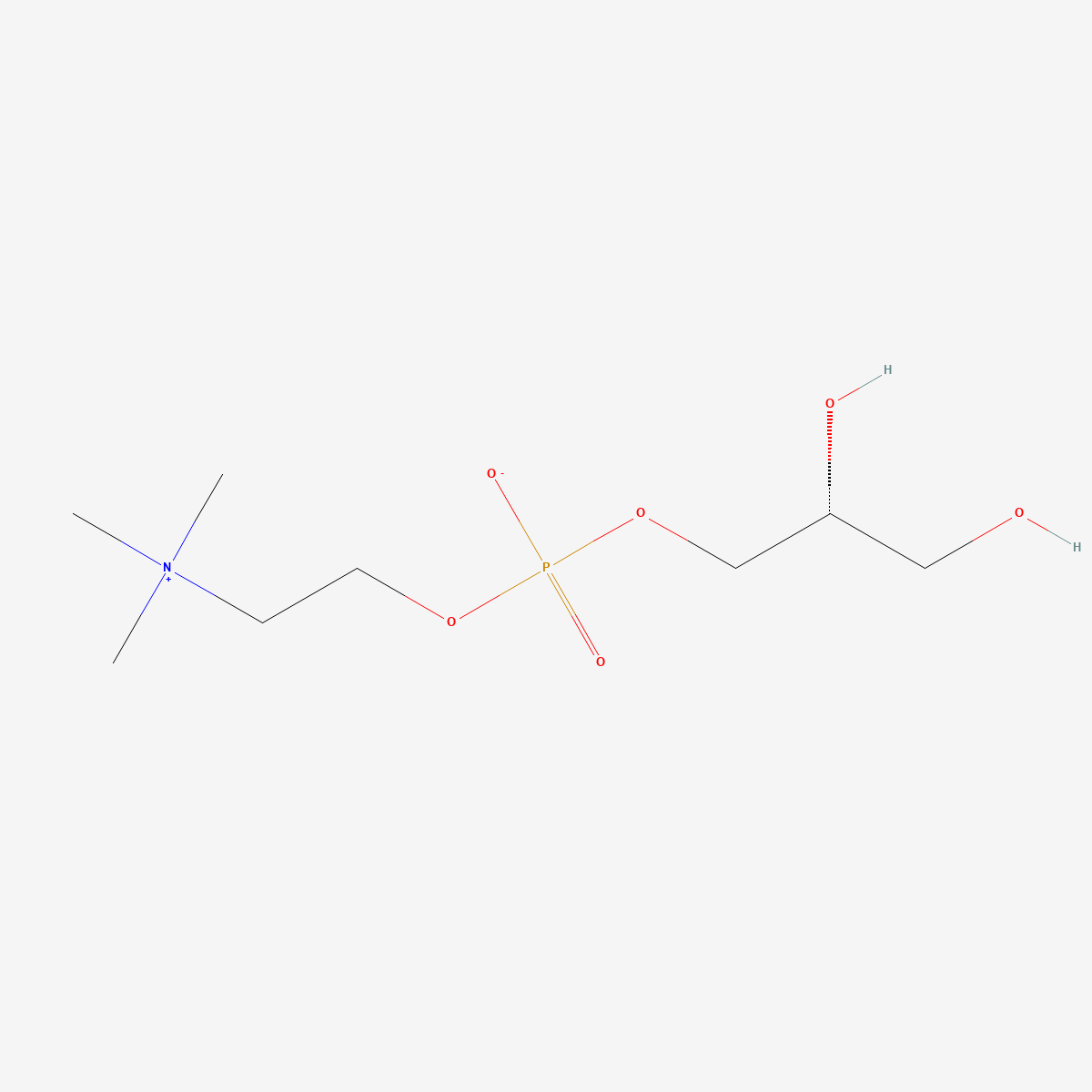
- Identity: L-alpha-glycerylphosphorylcholine (CAS 28319-77-9, C8H20NO6P, MW 257.22), a zwitterionic endogenous intermediate of phosphatidylcholine catabolism, also called choline alfoscerate or choline alphoscerate.
- The parent compound barely exists systemically: it is assumed to be hydrolysed by phosphodiesterases in the gut mucosa, and the kinetic profiles after intravenous and oral dosing in rats differ accordingly.[1]
- Named enzymes: ENPP6, a choline-specific glycerophosphodiesterase, hydrolyses glycerophosphocholine as a physiological substrate,[2] and intestinal Gpcpd1/GDE5 releases choline from alpha-GPC in the gut lumen.[3]
- Elimination is mostly as CO2: in rats, renal and faecal excretion of radioactivity was low, with most of the administered label exhaled as 14CO2 — faster for the glycerol-labelled than for the choline-labelled position.[1]
- The TMAO question is specific, not generic: deletion of Gpcpd1 in intestinal epithelium partially abolished the rise in blood TMAO after alpha-GPC administration,[3] and alpha-GPC promoted atherosclerosis in Apoe−/− mice.[7] A human single-dose study, however, saw plasma choline rise without a significant TMAO rise.[9]
- Status: supplied as a reference standard for laboratory research. Not a medicine, not a dietary supplement, and not for human or animal consumption.
Why there is no conventional concentration-time curve
For most compounds, a pharmacokinetics article reports what happened to the administered molecule. For alpha-GPC that framing fails at the first step, because the molecule is a phosphodiester that intestinal enzymes cleave. The consequence is not a technicality: the exposure metric of interest is a metabolite pool that already exists endogenously, at a baseline that varies with diet and between individuals.
The definitive rodent description comes from a radiolabel study in male and female rats given intravenous (10 mg/kg) and oral (100–300 mg/kg) doses, with the compound labelled twice, separately, on the glycerol moiety and on the choline moiety. Kinetic and metabolic profiles differed between the two routes, and the authors state the interpretation plainly: alpha-GPC is assumed to be hydrolysed by phosphodiesterases in the gut mucosa. The two labels then behaved differently, with different absorption, distribution and clearance properties producing different blood concentration-time curves of total radioactivity — which is what should happen if the molecule has been cut in two and the halves go their separate ways.[1]
Distribution was wide, with radioactivity concentrated in liver, kidney, lung and spleen relative to blood, while brain concentrations were comparable to or lower than total blood radioactivity. The metabolite profile in perfused brain showed a small amount of choline plus two unidentified metabolites, and choline was incorporated into brain phospholipids in increasing amounts over 24 h. Renal and faecal excretion of radioactivity was low for both labels; most of the administered radioactivity was exhaled as 14CO2, faster and more pronounced for the glycerol-labelled than for the choline-labelled position by both routes. Results did not differ between male and female rats.[1]
Two details deserve emphasis. Brain radioactivity was comparable to or lower than blood — this is not a compound that concentrates in the central nervous system, and the incorporation into brain phospholipids over 24 h is a slower synthetic process rather than accumulation of the parent. And a mass balance dominated by exhaled CO2 means the label has entered intermediary metabolism. At that point it is no longer a drug being eliminated; it is a nutrient being burned.
The enzymes that do the cutting have names
Two distinct enzymes have been characterised for this hydrolysis, and they operate in different compartments.
ENPP6 is a choline-specific phosphodiesterase shown to hydrolyse glycerophosphocholine as a physiological substrate. It is highly expressed in liver sinusoidal endothelial cells and in developing oligodendrocytes — cells that actively take up choline and synthesise phosphatidylcholine. ENPP6-deficient mice exhibited fatty liver and hypomyelination, both recognised choline-deficient phenotypes, and the choline moiety of glycerophosphocholine was incorporated into phosphatidylcholine in an ENPP6-dependent manner in vivo and in vitro.[2] That is an unusually complete answer to how extracellular choline is produced from this substrate.
The intestinal step is handled by a different protein. In Caco-2 monolayers, exogenously added alpha-GPC was hydrolysed to choline in the apical medium, and the resulting choline was then transported into the cells and on to the basolateral side. Glycerophosphodiesterase 1 (Gpcpd1/GDE5), widely expressed in gastrointestinal epithelium, was found not only inside the cells but also in the conditioned medium, and Gpcpd1 siRNA reduced hydrolysing activity in both locations. Mice with intestinal epithelial-specific Gpcpd1 deletion showed altered alpha-GPC metabolism in intestinal tissue and a partially abolished rise in blood TMAO after alpha-GPC administration.[3]
The location of that hydrolysis is the pivot of the whole safety question. Choline liberated in the gut lumen is available to the microbiota; choline liberated inside an enterocyte is not. A luminal step means the compound shares its payload with the bacteria before the host gets it.
What the human data actually measure
Human work on this compound measures plasma choline, not alpha-GPC. In a three-way randomised comparison in twelve normal volunteers — a no-drug control session, 1000 mg of alpha-GPC intramuscularly and 1000 mg of citicoline intramuscularly, with plasma choline by HPLC over 6 h — endogenous levels were stable through the control session, alpha-GPC produced a rapid rise peaking usually at the first (0.25 h) or second (0.5 h) sampling point, and citicoline produced a similar time course at considerably lower concentrations.[4] The route there was intramuscular, which bypasses precisely the gut step that dominates oral disposition, so it describes delivery rather than oral kinetics.
A more recent randomised controlled trial gives the oral comparison and, incidentally, the most relevant TMAO measurement. Twelve healthy men received 480 mg of soy-derived lysophosphatidylcholine, soy oil of matching lipid content as placebo, or glycerophosphocholine matched for choline content, in a single-dose pharmacokinetic design. Both lysophosphatidylcholine and glycerophosphocholine raised plasma choline, serum phospholipid and serum triglyceride concentrations, and neither of them significantly elevated plasma trimethylamine N-oxide.[9] That result is a genuine constraint on the TMAO narrative, and it should be stated with its limits: twelve subjects, a single dose, one time-course.
The European regulatory assessment reaches a compatible description. Evaluating L-alpha-GPC from phosphatidylcholine-enriched soya lecithin as a novel food, the EFSA Panel on Nutrition, Novel Foods and Food Allergens described it as an endogenous metabolite of phosphatidylcholine that is rapidly absorbed and serves as a source of choline, and concluded that it does not raise safety concerns at the proposed maximum use level of 203.7 mg/day, corresponding to 82.5 mg/day of choline, with margins of exposure of 111 for children over three years and 345 for adults from a 1000 mg/kg body weight per day no observed adverse effect level.[10] Note what that opinion covers: a defined preparation at a defined use level in food supplements, not the doses used in the dementia trial literature.
The TMAO chain, link by link
The mechanism at issue predates any interest in alpha-GPC. A metabolomics study identified three metabolites of dietary phosphatidylcholine — choline, TMAO and betaine — as predictors of cardiovascular risk, showed that supplementing mice with choline or TMAO promoted atherosclerosis, and confirmed with germ-free animals that gut flora are required for TMAO production from dietary choline.[5] The human confirmation used a phosphatidylcholine challenge with deuterium-labelled tracer before and after suppressing the intestinal microbiota with broad-spectrum antibiotics: TMAO rose after the challenge, was markedly suppressed by antibiotics and reappeared after withdrawal. In 4007 patients undergoing elective coronary angiography, the hazard ratio for a major adverse cardiovascular event over three years was 2.54 (95% CI 1.96–3.28) for the highest versus lowest TMAO quartile.[6]
Applying that chain to alpha-GPC specifically required new experiments, and they were done. In hyperlipidaemic Apoe−/− mice, alpha-GPC promoted atherosclerosis. Supplementation shifted gut microbial community structure — increased Parabacteroides, Ruminococcus and Bacteroides, decreased Akkermansia, Lactobacillus and Roseburia — consistent with reduced faecal and caecal short-chain fatty acids, and increased the relative abundance of bacteria encoding choline trimethylamine lyase (cutC).[7] The authors hold patents and consultancies in this field, disclosed in the publication, which is worth knowing but is not an argument against the data.
The epidemiology, and what it can and cannot settle
The observation that prompted the mechanistic work was a retrospective cohort study in the Korean National Health Insurance Service database covering 12 008 977 individuals aged 50 or older without pre-existing stroke or Alzheimer disease. Comparing 108 877 people prescribed alpha-GPC during 2006–2008 with 11 900 100 non-users, and then with a fully matched cohort, the adjusted hazard ratio for total stroke over the following decade was 1.43 (95% CI 1.41–1.46) after matching, with 1.34 (1.31–1.37) for ischaemic and 1.37 (1.29–1.46) for haemorrhagic stroke, and a dose-response relationship with increasing duration of prescription.[8]
A cohort of twelve million is not a small study, and the dose-response is not nothing. But the exposed group had a mean age of 68.3 years against 61.6 in non-users before matching, and people are prescribed a cholinergic precursor because a clinician has a reason — cognitive complaints, cerebrovascular disease — that is itself a stroke risk factor. Confounding by indication is the obvious competing explanation and no observational design removes it. The same group later applied the same database to a different outcome and found no association between alpha-GPC use and incident kidney cancer (adjusted HR 0.95, 95% CI 0.84–1.08, from 280 events among 81 970 users and 1570 among 409 801 matched non-users), explicitly framing that study around the TMAO hypothesis.[11] A null result from the same instrument, on another outcome where TMAO has been implicated, is useful calibration.
A 2025 review of GPC metabolic pathways and therapeutic applications summarises the position the field holds: extensive human use with no severe adverse effects reported, and possible risks of atherosclerosis and stroke awaiting necessary validation.[12] That is the honest state of it — mechanistic support on one side, a null human TMAO measurement and confounding by indication on the other.
Practical consequences for laboratory work
Three features of this compound’s disposition change how experiments should be designed. If the readout is a choline-dependent process, the endogenous choline pool is the background and must be measured, not assumed; the control session in the volunteer study existed for exactly that reason.[4] Any study addressing TMAO needs the microbiota treated as an experimental variable rather than a nuisance, because the entire conversion step lives there — germ-free, antibiotic-suppressed or cutC-quantified designs are the ones that produced interpretable answers.[5][7] And route selection is not cosmetic: intramuscular and oral administration bypass or engage the gut hydrolysis step respectively, and the rat radiolabel data show the two routes giving different metabolic profiles from the same molecule.[1]
On the bench, the material is markedly hygroscopic, so gravimetric standard preparation requires a dry environment and a stated water content, and the zwitterion is poorly retained on conventional reversed-phase columns without ion-pairing or HILIC conditions. The mechanistic background — why a precursor load should be expected to do anything at all — is covered separately in our note on alpha-GPC as an acetylcholine precursor.
Frequently asked questions
Is alpha-GPC absorbed intact?
Largely not. The rodent radiolabel study assumes hydrolysis by phosphodiesterases in the gut mucosa and observes different kinetic profiles after intravenous and oral dosing,[1] and Caco-2 experiments show hydrolysis occurring in the apical medium with choline, not the parent, being transported across.[3] The systemic exposure of interest is therefore choline and its downstream fate.
How is alpha-GPC eliminated?
Not principally by the kidney. In rats, renal and faecal excretion of radioactivity was low and comparable for both the glycerol and choline labels, while most of the administered radioactivity was exhaled as 14CO2, faster from the glycerol position.[1] That is the signature of a molecule entering intermediary metabolism rather than being excreted as a xenobiotic.
Does alpha-GPC raise TMAO in humans?
The one human single-dose measurement available did not find a significant rise: in twelve healthy men, glycerophosphocholine matched for choline content raised plasma choline but did not significantly elevate plasma TMAO.[9] In mice the picture differs — alpha-GPC administration raised blood TMAO, an effect partially abolished by intestinal Gpcpd1 deletion,[3] and alpha-GPC promoted atherosclerosis in Apoe−/− animals.[7] Single dose versus chronic exposure, and mouse versus human microbiota, are both plausible reasons for the discrepancy; none of them has been tested directly.
What should an alpha-GPC reference standard be characterised for in kinetic work?
Assay purity by a stated method, water content, and stereochemical identity, since the L-configuration is part of the systematic name and a generic assay does not check it; for a hygroscopic material a nominal mass without a moisture figure is not a usable basis for a calibration curve. Our alpha-GPC reference standard (CAS 28319-77-9) is supplied with identity documentation available on request.
Related compounds in our catalogue
Researchers building a comparison set for precursor-driven versus receptor-driven pharmacology frequently run L-DOPA reference material (CAS 59-92-7), the other major transmitter precursor whose disposition is governed by enzymatic conversion rather than by receptor occupancy, alongside pramiracetam (CAS 68497-62-1), whose reported activity converges on cholinergic terminals without supplying any choline of its own.
References
- Abbiati G, Fossati T, Lachmann G, Bergamaschi M, Castiglioni C. Absorption, tissue distribution and excretion of radiolabelled compounds in rats after administration of [14C]-L-alpha-glycerylphosphorylcholine. European Journal of Drug Metabolism and Pharmacokinetics. 1993;18(2):173–180. doi:10.1007/BF03188793 · PMID: 8243501
- Morita J, Kano K, Kato K, Takita H, Sakagami H, Yamamoto Y, Mihara E, Ueda H, Sato T, Tokuyama H, Arai H, Asou H, Takagi J, Ishitani R, Nishimasu H, Nureki O, Aoki J. Structure and biological function of ENPP6, a choline-specific glycerophosphodiester-phosphodiesterase. Scientific Reports. 2016;6:20995. doi:10.1038/srep20995 · PMID: 26888014
- Chen S, Inui S, Aisyah R, Nakashima R, Kawaguchi T, Hinomoto M, Nakagawa Y, Sakuma T, Sotomaru Y, Ohshima N, Kumrungsee T, Ohkubo T, Yamamoto T, Miura Y, Suzuki T, Yanaka N. Role of Gpcpd1 in intestinal alpha-glycerophosphocholine metabolism and trimethylamine N-oxide production. Journal of Biological Chemistry. 2024;300(12):107965. doi:10.1016/j.jbc.2024.107965 · PMID: 39510189
- Gatti G, Barzaghi N, Acuto G, Abbiati G, Fossati T, Perucca E. A comparative study of free plasma choline levels following intramuscular administration of L-alpha-glycerylphosphorylcholine and citicoline in normal volunteers. International Journal of Clinical Pharmacology, Therapy and Toxicology. 1992;30(9):331–335. PMID: 1428296
- Wang Z, Klipfell E, Bennett BJ, Koeth R, Levison BS, Dugar B, Feldstein AE, Britt EB, Fu X, Chung YM, Wu Y, Schauer P, Smith JD, Allayee H, Tang WH, DiDonato JA, Lusis AJ, Hazen SL. Gut flora metabolism of phosphatidylcholine promotes cardiovascular disease. Nature. 2011;472(7341):57–63. doi:10.1038/nature09922 · PMID: 21475195
- Tang WH, Wang Z, Levison BS, Koeth RA, Britt EB, Fu X, Wu Y, Hazen SL. Intestinal microbial metabolism of phosphatidylcholine and cardiovascular risk. New England Journal of Medicine. 2013;368(17):1575–1584. doi:10.1056/NEJMoa1109400 · PMID: 23614584
- Wang Z, Hazen J, Jia X, Org E, Zhao Y, Osborn LJ, Nimer N, Buffa J, Culley MK, Krajcik D, van den Born BH, Zwinderman K, Levison BS, Nieuwdorp M, Lusis AJ, DiDonato JA, Hazen SL. The nutritional supplement L-alpha glycerylphosphorylcholine promotes atherosclerosis. International Journal of Molecular Sciences. 2021;22(24):13477. doi:10.3390/ijms222413477 · PMID: 34948275
- Lee G, Choi S, Chang J, Choi D, Son JS, Kim K, Kim SM, Jeong S, Park SM. Association of L-α glycerylphosphorylcholine with subsequent stroke risk after 10 years. JAMA Network Open. 2021;4(11):e2136008. doi:10.1001/jamanetworkopen.2021.36008 · PMID: 34817582
- Tanaka-Kanegae R, Kimura H, Hamada K. Pharmacokinetics of soy-derived lysophosphatidylcholine compared with that of glycerophosphocholine: a randomized controlled trial. Bioscience, Biotechnology, and Biochemistry. 2024;88(6):648–655. doi:10.1093/bbb/zbae031 · PMID: 38490741
- EFSA Panel on Nutrition, Novel Foods and Food Allergens (NDA); Turck D, Bohn T, Cámara M, Castenmiller J, De Henauw S, Jos Á, Maciuk A, Mangelsdorf I, McNulty B, Naska A, Pentieva K, Siani A, Thies F, Aguilera-Gómez M, Frenzel T, McArdle HJ, Moldeus P, Neuhäuser-Berthold M, Schlatter JR, van Loveren H, Trezza V, Beneventi E, Nuin Garciarena I, Rossi A, Magani M, Hirsch-Ernst KI. Safety of L-alpha-glycerylphosphorylcholine (L-alpha-GPC) from soya phospholipids (lecithin) as a novel food pursuant to Regulation (EU) 2015/2283. EFSA Journal. 2026;24(5):e10008. doi:10.2903/j.efsa.2026.10008 · PMID: 42131868
- Park YJ, Yu J, Kang JH, Park SJ, Jeong S, Lee G, Shin HY, Park SM. Association between L-α-glycerylphosphorylcholine use and risk of kidney cancer: a nationwide representative retrospective cohort study. Cancer Epidemiology. 2026;103:103152. doi:10.1016/j.canep.2026.103152 · PMID: 42361543
- Che X, Zhao Y, Xu Z, Hu Y, Ren A, Wu C, Yang J. Unlocking the potential of L-α-glycerylphosphorylcholine: from metabolic pathways to therapeutic applications. Nutrition Reviews. 2025;83(8):1594–1620. doi:10.1093/nutrit/nuaf008 · PMID: 40036805
Research use only. The compounds discussed are supplied as reference standards for laboratory research. They are not medicines, not dietary supplements, and are not for human or animal consumption. Nothing in this article is medical advice or a recommendation for use in humans. Any quantities mentioned are those reported in the published studies cited above and appear solely to describe that research accurately.