L-DOPA is given because dopamine cannot cross the blood-brain barrier, and it is given with carbidopa or benserazide because otherwise most of it is decarboxylated before it gets anywhere near the brain. That much is textbook. What the textbook version obscures is that there are two entirely separate bottlenecks on the way in, and a decarboxylase inhibitor removes only the first. The second — competition with dietary amino acids for a saturable transporter at the barrier itself — was demonstrated in 1984 by an experiment that abolished the clinical effect of an intravenous infusion without changing the plasma concentration at all. Any pharmacokinetic account of this compound that stops at plasma is describing half the journey.
Key points
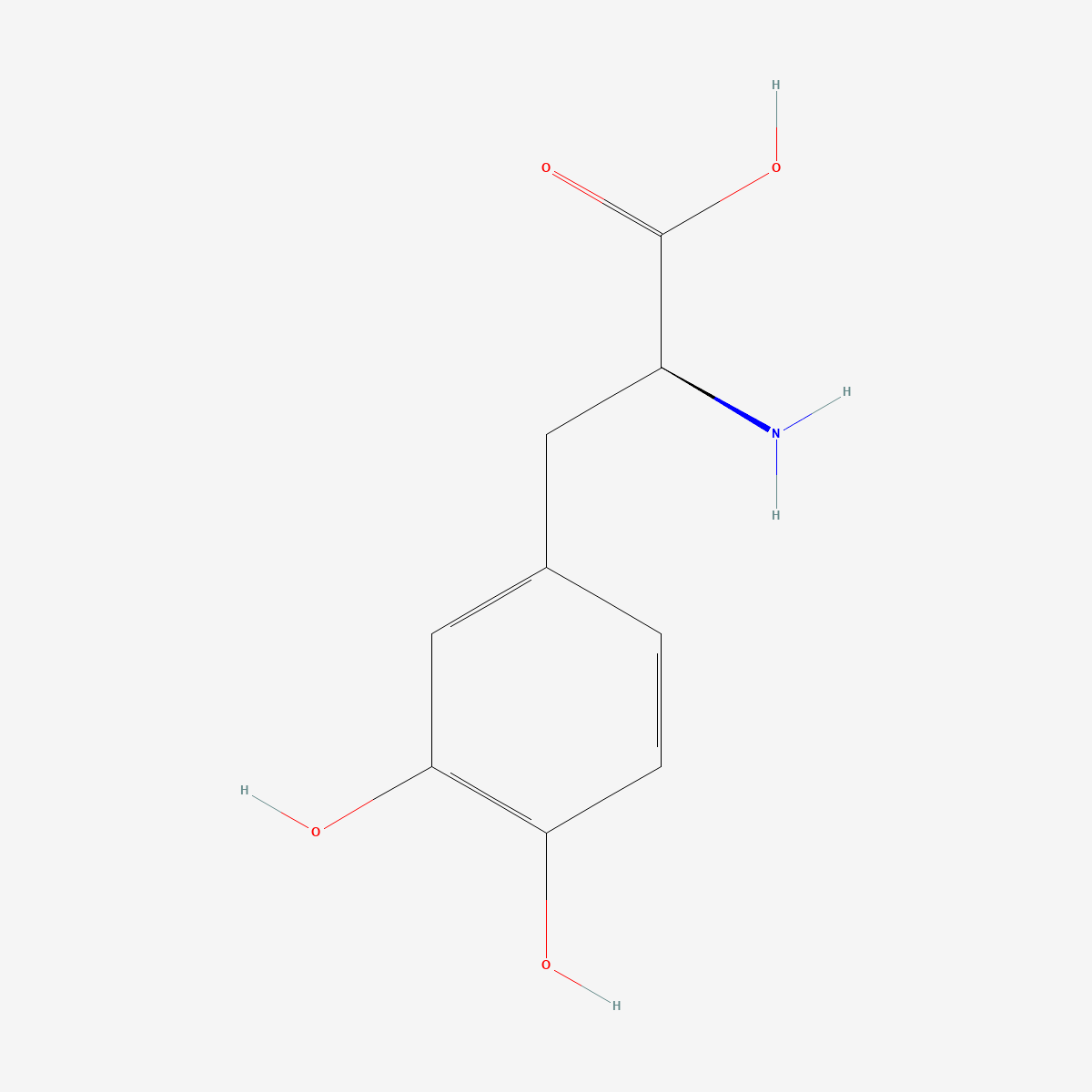
- Compound: L-DOPA (levodopa, L-3,4-dihydroxyphenylalanine), CAS 59-92-7, C9H11NO4, MW 197.19 — a catechol and a large neutral amino acid in one molecule, and both halves of that description determine its fate.
- Absorption: takes place in the proximal small intestine, so the rate-limiting step is gastric emptying rather than permeability. Meals reduced peak plasma concentrations by 29% and delayed absorption by 34 minutes in patients with motor fluctuations.[3]
- Short half-life: a single oral dose of entacapone prolonged the elimination half-life from 1.5 to 2.0 hours and increased area under the curve by 46% in eight parkinsonian patients.[4]
- Two sequential metabolic blocks: inhibiting peripheral decarboxylase shifts the load onto catechol-O-methyltransferase. Raising carbidopa from 25 mg to 50 or 100 mg increased exposure to 100 mg levodopa by 13% and 17% alone, but by 29% and 36% when entacapone was also given.[6]
- Transport competition: high-protein meals or oral phenylalanine, leucine or isoleucine at 100 mg/kg reversed the therapeutic effect of infused levodopa without reducing plasma levodopa concentrations; glycine and lysine at identical doses had no effect.[3]
- Status: supplied as a reference standard for laboratory research. Not a medicine and not for human or animal consumption.
Absorption is a gastric emptying problem, not a permeability problem
L-DOPA is absorbed from the proximal small intestine by the same carrier system that handles dietary large neutral amino acids. Because the stomach itself contributes little absorption, the shape of the plasma curve is set mainly by how fast the stomach delivers the dose to the duodenum — a process that is variable in healthy people and markedly more variable in the population in which this compound is most studied.
The cleanest demonstration is a single-patient study by Kurlan and colleagues. A patient whose motor state fluctuated in a pattern that appeared clinically random was given levodopa/carbidopa first by the standard oral route and then directly into the duodenum by nasoduodenal tube, with mobility rated and plasma dopa assayed throughout. During oral therapy, mobility varied unpredictably in relation to dosing. During duodenal delivery, the pattern became predictable and reproducible: each intraduodenal dose produced 60 to 90 minutes of benefit, with end-of-dose deterioration recurring on schedule. Plasma dopa concentrations correlated closely with mobility ratings under both routes.[7] The randomness, in other words, was in the stomach rather than in the brain.
Deleu and colleagues extended the comparison to four patients with unpredictable fluctuations and episodic unresponsiveness to single doses, comparing them retrospectively with fluctuating patients whose response to single oral doses was preserved. All patients in the unresponsive group showed delayed absorption related to delayed and erratic gastric emptying, and the authors identified a threshold plasma concentration associated with switching on or off, with rapid attainment of that threshold associated with quicker onset and a more prolonged response.[8] That threshold behaviour is why absorption rate, not only absorption extent, is a first-order pharmacokinetic variable for this compound.
The first bottleneck: decarboxylation before the dose leaves the periphery
Aromatic L-amino acid decarboxylase is abundant in the gut wall, liver, kidney and vascular endothelium. Given alone, L-DOPA is therefore largely converted to dopamine before reaching the brain — dopamine that cannot cross the barrier and that accounts for much of the peripheral pharmacology. The reason a peripheral decarboxylase inhibitor increases central effect while decreasing the dose required is covered in detail in our account of why the geography of decarboxylase activity determines what L-DOPA does. The pharmacokinetic question here is narrower: how much of the block is actually achieved at the doses used.
Tuunainen and colleagues addressed this directly in a double-blind, placebo-controlled, randomised crossover study in 25 healthy volunteers, comparing 100 mg immediate-release levodopa given with 25, 50 or 100 mg carbidopa, with and without 200 mg entacapone. Without entacapone, raising carbidopa from 25 mg to 50 or 100 mg increased levodopa exposure by only 13% and 17%. With entacapone co-administered, the same carbidopa increases produced 29% and 36% increases in exposure, and also clearly raised trough concentrations, while peak concentrations were not significantly affected.[6]
Two things follow. First, the conventional 25 mg of carbidopa does not saturate the block — there is measurable headroom. Second, and more interesting, the size of the benefit from further decarboxylase inhibition depends on whether the alternative disposal route is also blocked. That is a signature of sequential competing pathways, and it means the two inhibitors are not additive in the naive sense.
Blocking decarboxylase moves the problem to catechol-O-methyltransferase
With decarboxylation inhibited, O-methylation to 3-O-methyldopa becomes the dominant peripheral route. Nutt and colleagues quantified what happens when that route is blocked too, in an open-label study of entacapone given acutely and for eight weeks to 15 parkinsonian subjects with fluctuating responses. Entacapone decreased the plasma elimination of both orally and intravenously administered levodopa, with absorption minimally affected. During chronic treatment, daily levodopa dosages were reduced by 27% yet mean plasma levodopa concentrations rose by 23%; plasma 3-O-methyldopa concentrations fell by 60%; and the duration of action of single doses increased by a mean of 56%.[5]
Myllylä and colleagues supply the elimination parameters from a crossover study of a single 200 mg entacapone dose in eight parkinsonian patients. Area under the curve rose by 46%, from 3,620 to 5,280 h·ng/mL, and the elimination half-life was prolonged from 1.5 to 2.0 hours. Exposure to 3,4-dihydroxyphenylacetic acid, the monoamine-oxidase-dependent metabolite, rose substantially while homovanillic acid exposure fell.[4] The redistribution among metabolites is the informative part: blocking one catabolic branch does not simply increase the parent, it rewrites the metabolite profile, which matters if metabolite concentrations are being used as readouts.
Later-generation inhibitors show the same shape at larger magnitudes. In a randomised, double-blind, placebo-controlled study in four parallel groups of 10 patients each, opicapone at 5, 15 and 30 mg once daily for up to 28 days increased levodopa exposure over the six hours after a dose by 24.7%, 53.9% and 65.6% relative to placebo, with maximum catechol-O-methyltransferase inhibition ranging from 52% to 80% across those doses.[9] Even at 80% enzyme inhibition, exposure does not double — a useful reminder that levodopa has several disposal routes and that closing one of them redistributes rather than eliminates the loss.
The second bottleneck: the transporter at the blood-brain barrier
The experiment that separates the two bottlenecks is Nutt and colleagues’ 1984 study of the on-off phenomenon in nine patients with an oscillating motor state. Three findings sit in one paper. Meals reduced peak plasma levodopa concentrations by 29% and delayed absorption by 34 minutes — an absorption effect. Bypassing absorption entirely by continuous intravenous infusion produced a stable clinical state lasting 12 hours in all six patients tested and up to 36 hours in some — confirming that much of the fluctuation is peripheral. And then the decisive manipulation: during a constant infusion, high-protein meals or oral phenylalanine, leucine or isoleucine at 100 mg/kg reversed the therapeutic effect without reducing plasma levodopa concentrations, while glycine and lysine at identical doses did nothing.[3]
That is as clean a dissociation between plasma concentration and effect-site concentration as clinical pharmacology produces. The amino acids that interfered — phenylalanine, leucine, isoleucine — are large neutral amino acids and substrates for the same barrier transporter; the ones that did not — glycine and lysine — belong to different transport classes. The competition is therefore specific to the carrier, not a general effect of an amino acid load.
For anyone designing an experiment, the consequence is blunt: plasma L-DOPA is a poor proxy for brain L-DOPA whenever the competing amino acid pool is not controlled. A study that standardises the dose but not the diet has left a large, specific and well-documented source of variance unmeasured.
Variability that survives all of the above
Even under fasting conditions with a fixed formulation, levodopa exposure varies substantially between individuals. The parameters were catalogued in the early 1980s,[1] and review-level accounts continue to emphasise that irregular uptake and marked dose-by-dose variability in plasma concentrations predict many of the problems that emerge with chronic use.[2] Some of that variance is now attributable to identifiable covariates.
Miyaue and Nagai analysed 42 patients with Parkinson’s disease (21 male, 21 female; mean age 72.88 ± 7.51 years) who underwent pharmacokinetic evaluation after an oral levodopa/carbidopa formulation in the fasting state. Levodopa area under the curve was significantly higher in female than in male patients (P = 0.017), with multiple regression estimating female sex as associated with a 21.9% increase; no significant sex-related difference appeared in carbidopa pharmacokinetics.[10] That the effect appears in the substrate but not in the inhibitor is a specific finding rather than a general statement about body size, and it has not yet been mechanistically explained.
Formulation contributes as well. In a single-dose, open, randomised three-way crossover in 19 healthy subjects, a dispersible levodopa/benserazide 100/25 mg formulation reached maximum concentration earlier and higher than levodopa/carbidopa microtablets delivering the same 100 mg of levodopa, although areas under the curve were equivalent.[11] Equivalent exposure with different peak timing is exactly the situation in which a threshold-governed response, of the kind Deleu and colleagues described,[8] will differ between formulations that a bioequivalence analysis calls the same.
Practical notes for handling and assay
Two chemical properties dominate laboratory work with this compound. It is a catechol, so it oxidises readily in neutral and alkaline aqueous solution, and the oxidation products are coloured — a visibly darkening solution is a degraded solution. It is also zwitterionic with poor solubility at physiological pH, which constrains formulation of stock solutions. Plasma and tissue samples intended for levodopa assay are conventionally handled with an antioxidant and acidification to suppress oxidation before analysis, and the same precaution applies to standards prepared for calibration.
For exposure work, 3-O-methyldopa is worth measuring alongside the parent. Its concentrations move in the opposite direction to catechol-O-methyltransferase inhibition — falling by 60% under chronic entacapone[5] — and because it is far longer-lived than levodopa it integrates exposure across doses rather than reflecting the last one. Where a study compared levodopa formulations, 3-O-methyldopa levels were used as a supporting comparison precisely on that basis.[11]
Frequently asked questions
Why does a protein meal interfere with L-DOPA even when the drug is given intravenously?
Because two different steps are involved. Food slows gastric emptying and lowers peak plasma concentrations after oral dosing, but the more specific effect is competition at the blood-brain barrier. During a constant intravenous infusion, high-protein meals or oral phenylalanine, leucine or isoleucine at 100 mg/kg reversed the therapeutic effect without reducing plasma levodopa concentrations, while glycine and lysine had no effect.[3] Bypassing the gut does not bypass the transporter.
What is the half-life of L-DOPA?
Short. In parkinsonian patients receiving levodopa with carbidopa, the elimination half-life was 1.5 hours and rose to 2.0 hours with a single 200 mg dose of entacapone, with a 46% increase in area under the curve.[4] Half-life figures for this compound are only interpretable together with the accompanying decarboxylase and catechol-O-methyltransferase inhibition, because both change the number.
Does more carbidopa always mean more levodopa exposure?
Only modestly, and the size of the gain depends on what else is blocked. Raising carbidopa from 25 mg to 50 or 100 mg alongside 100 mg immediate-release levodopa increased exposure by 13% and 17% in healthy volunteers, but by 29% and 36% when 200 mg entacapone was co-administered, with trough concentrations clearly raised and peak concentrations essentially unchanged.[6]
What should an L-DOPA reference standard provide for pharmacokinetic work?
A stated assay with the method behind it, confirmation of enantiomeric identity, since the D-isomer is not a substrate for the relevant enzymes and its presence would distort any conversion measurement, and documentation adequate for calibrating an assay in which the analyte oxidises during handling. Our L-DOPA reference material (CAS 59-92-7) is supplied with identity and purity documentation available on request.
Related compounds in our catalogue
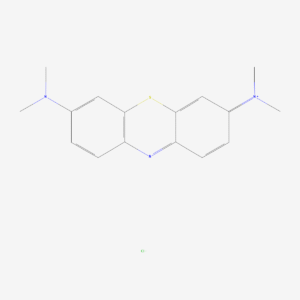
Work on this pathway frequently runs alongside methylene blue reference standard (CAS 61-73-4), a potent monoamine oxidase A inhibitor that alters the catabolic side of dopamine turnover and therefore the metabolite profile of any levodopa experiment, and bromantane reference standard (CAS 87913-26-6), whose proposed mechanism acts on the expression of the decarboxylase step rather than on its substrate supply.
References
- Nutt JG, Fellman JH. Pharmacokinetics of levodopa. Clinical Neuropharmacology. 1984;7(1):35–49. doi:10.1097/00002826-198403000-00002 · PMID: 6367973
- LeWitt PA. Levodopa therapy for Parkinson’s disease: pharmacokinetics and pharmacodynamics. Movement Disorders. 2015;30(1):64–72. doi:10.1002/mds.26082 · PMID: 25449210
- Nutt JG, Woodward WR, Hammerstad JP, Carter JH, Anderson JL. The “on-off” phenomenon in Parkinson’s disease. Relation to levodopa absorption and transport. New England Journal of Medicine. 1984;310(8):483–488. doi:10.1056/NEJM198402233100802 · PMID: 6694694
- Myllylä VV, Sotaniemi KA, Illi A, Suominen K, Keränen T. Effect of entacapone, a COMT inhibitor, on the pharmacokinetics of levodopa and on cardiovascular responses in patients with Parkinson’s disease. European Journal of Clinical Pharmacology. 1993;45(5):419–423. doi:10.1007/BF00315512 · PMID: 8112370
- Nutt JG, Woodward WR, Beckner RM, Stone CK, Berggren K, Carter JH, Gancher ST, Hammerstad JP, Gordin A. Effect of peripheral catechol-O-methyltransferase inhibition on the pharmacokinetics and pharmacodynamics of levodopa in parkinsonian patients. Neurology. 1994;44(5):913–919. doi:10.1212/wnl.44.5.913 · PMID: 8190296
- Tuunainen J, Sjöstedt N, Vahteristo M, Ellmén J, Kuoppamäki M, Rouru J, Yliperttula M. Effect of carbidopa dose on levodopa pharmacokinetics with and without catechol-O-methyltransferase inhibition in healthy subjects. European Journal of Drug Metabolism and Pharmacokinetics. 2023;48(1):23–34. doi:10.1007/s13318-022-00800-w · PMID: 36309950
- Kurlan R, Rothfield KP, Woodward WR, Nutt JG, Miller C, Lichter D, Shoulson I. Erratic gastric emptying of levodopa may cause “random” fluctuations of parkinsonian mobility. Neurology. 1988;38(3):419–421. doi:10.1212/wnl.38.3.419 · PMID: 3126408
- Deleu D, Ebinger G, Michotte Y. Clinical and pharmacokinetic comparison of oral and duodenal delivery of levodopa/carbidopa in patients with Parkinson’s disease with a fluctuating response to levodopa. European Journal of Clinical Pharmacology. 1991;41(5):453–458. doi:10.1007/BF00626368 · PMID: 1761073
- Ferreira JJ, Rocha JF, Falcão A, Santos A, Pinto R, Nunes T, Soares-da-Silva P. Effect of opicapone on levodopa pharmacokinetics, catechol-O-methyltransferase activity and motor fluctuations in patients with Parkinson’s disease. European Journal of Neurology. 2015;22(5):815–825. doi:10.1111/ene.12666 · PMID: 25649051
- Miyaue N, Nagai M. Sex differences in the pharmacokinetics of levodopa and carbidopa in patients with Parkinson’s disease. Parkinsonism & Related Disorders. 2025;139:108006. doi:10.1016/j.parkreldis.2025.108006 · PMID: 40845588
- Nyholm D, Lewander T, Gomes-Trolin C, Bäckström T, Panagiotidis G, Ehrnebo M, Nyström C, Aquilonius SM. Pharmacokinetics of levodopa/carbidopa microtablets versus levodopa/benserazide and levodopa/carbidopa in healthy volunteers. Clinical Neuropharmacology. 2012;35(3):111–117. doi:10.1097/WNF.0b013e31825645d1 · PMID: 22549097
Research use only. The compounds discussed are supplied as reference standards for laboratory research. They are not medicines, not dietary supplements, and are not for human or animal consumption. Nothing in this article is medical advice or a recommendation for use in humans. Any quantities mentioned are those reported in the published studies cited above and appear solely to describe that research accurately.