Two well-conducted human studies put the oral bioavailability of methylene blue at opposite ends of the scale. One reported that oral exposure was roughly fifteen times lower than intravenous; the other, using an aqueous formulation and a different sampling matrix, reported 72%. Neither is wrong. The disagreement is the single most informative fact about this compound’s disposition, because methylene blue is not one analyte travelling through the body — it is a redox couple that partitions into red cells, is demethylated into a metabolite more potent than itself at the enzyme that matters most, and is then measured by an assay that may or may not see all of it.
Key points
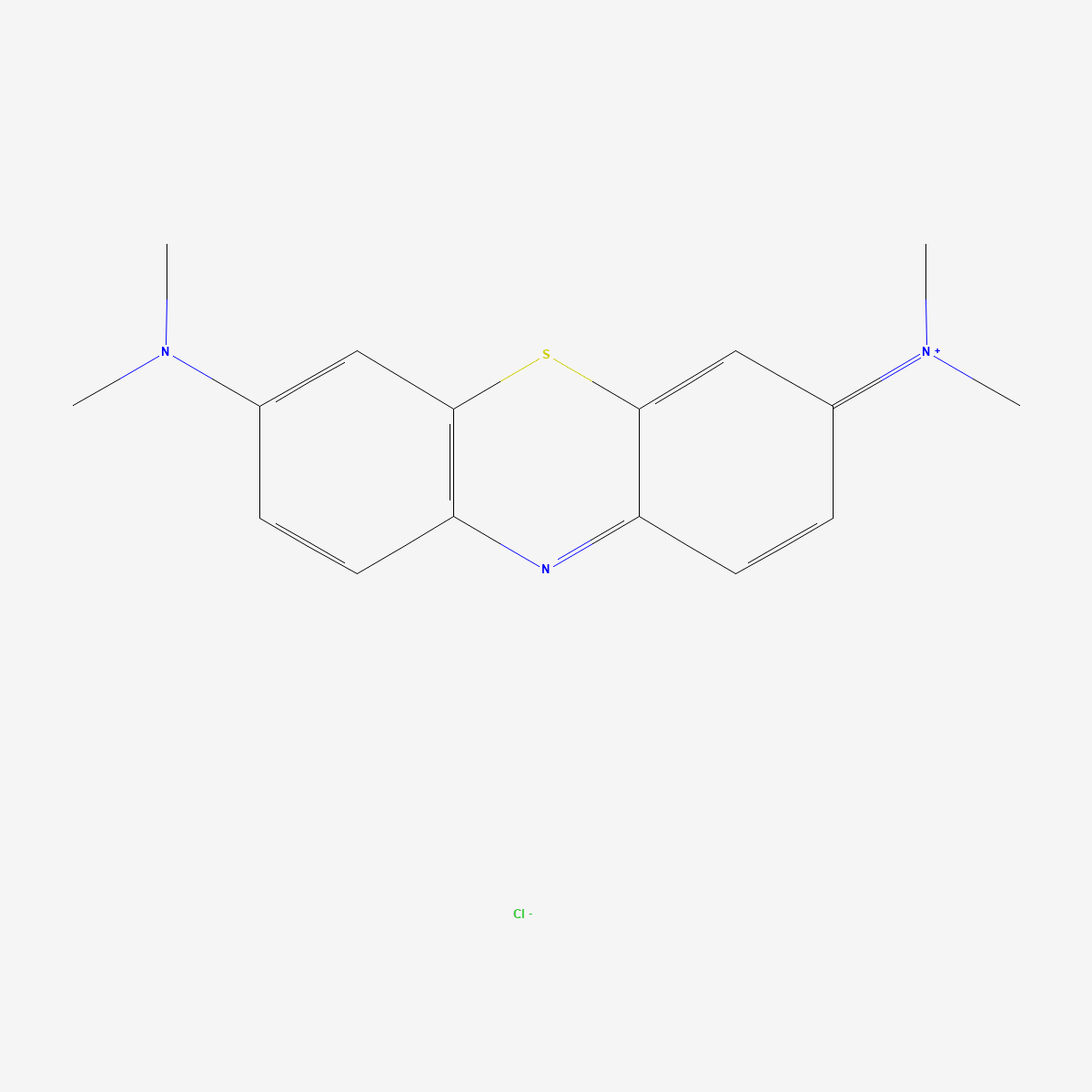
- Compound: methylene blue (methylthioninium chloride), CAS 61-73-4, C16H18ClN3S, MW 319.9 — a permanently charged phenothiazinium cation, which is the starting point for everything below.
- Absorption: absolute bioavailability of 72.3 ± 23.9% from an aqueous oral formulation in 16 healthy individuals;[2] an earlier study using different dosing and whole-blood sampling found oral area under the curve far below intravenous (9 vs 137 nmol/min/mL).[1]
- Distribution and elimination: multiphasic whole-blood time course after intravenous dosing with an estimated terminal half-life of 5.25 hours; intraduodenal administration in rats gave higher intestinal wall and liver concentrations but lower blood and brain concentrations than the intravenous route.[1]
- Metabolism: N-demethylation, with azure B as the major monodemethylated metabolite. Azure B inhibits monoamine oxidase A with an IC50 of 11 nM, roughly sixfold more potent than the parent compound at 70 nM under identical conditions.[4]
- Reduction: the compound cycles to its colourless leuco form, and urinary recovery is reported for the sum of the two species rather than for either alone.[1] The reducing equivalents come from NADPH, which is why glucose-6-phosphate dehydrogenase deficiency changes the picture.[6]
- Status: supplied as a reference standard for laboratory research. Not a medicine and not for human or animal consumption.
Why the bioavailability figures disagree
The two studies that anchor this question were designed for different purposes and measured different things. Peter and colleagues gave seven volunteers 100 mg of methylene blue intravenously and orally, with and without mesna, and measured concentrations in whole blood by high-performance liquid chromatography. The intravenous time course was multiphasic with an estimated terminal half-life of 5.25 hours. Oral exposure was far lower: area under the concentration–time curve of 9 nmol/min/mL against 137 nmol/min/mL for the intravenous route. Co-administration of mesna, which could in principle alter distribution through ion pairing, changed nothing. The authors attributed the discrepancy primarily to organ distribution rather than to failed absorption, supporting that reading with rat data showing that intraduodenal dosing loads the intestinal wall and liver while leaving less in blood and brain.[1]
Walter-Sack and colleagues asked a narrower question with a different formulation. Sixteen healthy individuals received 50 mg intravenously and 500 mg orally as an aqueous solution in an intra-individual crossover separated by a one-week washout, with plasma as the matrix. Mean plasma area under the curve was 7,639 ± 3,384 ng/mL·h after the intravenous dose and 51,171 ± 17,147 ng/mL·h after the tenfold oral dose, giving an absolute bioavailability of 72.3 ± 23.9%. A subsequent parallel-group comparison found that co-administered chloroquine raised methylene blue plasma concentrations significantly — and the authors were explicit that the increase appeared in plasma but not in whole blood.[2]
That last observation is the key to the whole discrepancy. A cation that partitions into erythrocytes and is reduced inside them has no single concentration; it has a plasma concentration and a red-cell concentration, and the ratio is not fixed. Whole blood and plasma are therefore not two ways of measuring the same quantity. Any comparison of methylene blue pharmacokinetic parameters across papers has to begin by checking the matrix, and many secondary sources quote a bioavailability figure without stating which was used.
Reduction is a disposition step, not a side reaction
Most compounds are eliminated by being converted into something more polar. Methylene blue is eliminated partly by being converted into the same molecule in a different oxidation state. The oxidised, blue form accepts electrons and becomes leucomethylene blue, which is colourless; the leuco form can be reoxidised. The consequences of that cycle are covered in a separate discussion of the redox-catalytic mechanism of methylene blue and its biphasic dose–response; what matters here is that it makes the compound’s fate genuinely difficult to account for.
Peter and colleagues reported urinary recovery for methylene blue and its leucoform together, and found that excretion was only moderately higher after intravenous administration — the two figures being 18% and 28% of dose.[1] Pairing the two species in a single number is not sloppiness; the ratio measured in a urine sample depends on how the sample was handled after collection, because the leuco form reoxidises in air. A mass-balance study of methylene blue has to specify sample handling in a way that most do not.
The reducing equivalents for that step come from NADPH, which in the erythrocyte is regenerated by the pentose phosphate pathway under the control of glucose-6-phosphate dehydrogenase. In an evidence-based review of medication use in glucose-6-phosphate dehydrogenase deficiency, Youngster and colleagues searched the literature for every compound commonly listed as unsafe and concluded that solid evidence existed to prohibit only seven currently used medications — dapsone, methylthioninium chloride, nitrofurantoin, phenazopyridine, primaquine, rasburicase and tolonium chloride.[6] Methylene blue is on that short list precisely because its disposition and its haematological toxicity run through the same enzyme. An individual who cannot regenerate NADPH efficiently both handles the compound differently and is harmed by it.
The metabolite is the more potent enzyme inhibitor
N-demethylation of the phenothiazinium ring system yields azure B as the major monodemethylated product, with azure A appearing as a further demethylation step. Petzer and colleagues characterised azure B against recombinant human monoamine oxidase and found it to be a potent, reversible inhibitor of the A isoform with an IC50 of 11 nM — approximately sixfold more potent than methylene blue itself, measured at 70 nM under identical conditions. The B isoform was also inhibited reversibly, but only with an IC50 of 968 nM. The authors argued that azure B is an under-recognised contributor to the pharmacology and toxicology of the parent compound.[4]
This inverts the usual metabolic logic. For most compounds, demethylation moves the molecule towards inactivity and excretion. Here it produces a species that is more active at the target responsible for the compound’s most consequential interaction, and that species accumulates as the parent is cleared. An experiment that measures only the parent concentration is therefore quantifying the weaker of the two relevant inhibitors.
Gillman assembled the clinical side of this argument in a review of central nervous system toxicity involving methylene blue, concluding that 13 of 14 reported cases met the Hunter Serotonin Toxicity Criteria and were therefore serotonin toxicity rather than some other neurological event. The pharmacokinetic anchor in that review is the observation that an intravenous dose of only 0.75 mg/kg produced a peak plasma concentration of 500 ng/mL — 1.6 µM — indicating that concentrations in the central nervous system reach a level that inhibits monoamine oxidase A. The conclusion drawn was that essentially all proposed uses of the compound entail concentrations that block the enzyme.[5]
For laboratory work the implication is procedural. Any experimental system containing monoamines and exposed to methylene blue at micromolar concentrations should be treated as a system with monoamine oxidase A inhibited, and the inhibition will be deeper than the nominal parent concentration suggests once demethylation has proceeded.
What the interaction data actually show
The best-characterised pharmacokinetic interaction runs in the direction of methylene blue affecting a co-administered compound. Rengelshausen and colleagues gave 24 healthy individuals a three-day course of therapeutic oral chloroquine with either placebo or 130 mg methylene blue twice daily, measuring chloroquine, desethylchloroquine and methylene blue in whole blood, plasma and urine for 28 days after the last dose. Weight-normalised chloroquine exposure showed a trend towards reduction that did not reach significance (249 ± 98.2 against 315 ± 65.0 h·µg/L/kg, P = 0.06), while exposure to the desethyl metabolite fell by 35% (P = 0.03). The metabolic ratio between parent and metabolite was unchanged, as were the renal clearance of chloroquine and the whole-blood-to-plasma ratio. The authors concluded that the reduction was small and unlikely to be clinically relevant.[7]
The reverse direction — chloroquine raising methylene blue concentrations — came out of the bioavailability study, and, as noted above, appeared in plasma but not in whole blood.[2] Taken together the two studies describe an interaction that is real, modest, and partly a redistribution between blood compartments rather than a change in total body exposure. That is an unusual shape for a drug interaction, and it is a direct consequence of the compound being a cation with a large intracellular reservoir.
Measuring it: the assay has to see two oxidation states and two metabolites
Bioanalysis of methylene blue has converged on chromatographic separation with either mass spectrometric or ultraviolet detection, and the methods useful for disposition work are those that resolve the demethylated metabolites alongside the parent. Kim and colleagues developed a liquid chromatography–tandem mass spectrometry method for methylene blue and azure B in rat plasma using acetonitrile protein precipitation and a HILIC column, linear from 1 to 1000 ng/mL for both analytes with a lower limit of quantitation of 1 ng/mL from 20 µL of plasma, intra- and inter-assay precision and accuracy below 12%, and applied it to a pharmacokinetic study.[8]
A more recent alternative avoids mass spectrometry altogether. Ivanov and colleagues described a micellar electrokinetic chromatography method with ultraviolet detection at 292 nm, using liquid-phase extraction with acetonitrile and dichloromethane followed by solid-phase extraction on a strong cation-exchange sorbent, achieving a limit of detection of 5.8 ng/mL with a total analysis time of 16.5 minutes, accuracy of 97.4–103% and intraday and interday imprecision of 5.7% and 2.5%. The approach was tested on blood from rats given methylene blue, also detects azure A and azure B, and was reported as suitable for brain, liver and kidney tissue.[9] The strong cation-exchange step in both approaches is not incidental: it exploits the permanent positive charge that governs this compound’s behaviour throughout its disposition.
Where the literature is thinner than it looks
Methylene blue has been in medical use since the nineteenth century and the indexed record for it is enormous, but most of that record concerns the dye as a stain, a photosensitiser, a tracer or an adsorption substrate for materials science rather than as a compound whose disposition has been characterised. Three gaps are worth stating plainly.
First, there is no modern radiolabelled mass-balance study in humans. The foundational absorption, metabolism and excretion work in man and dog is a 1972 paper by DiSanto and Wagner,[3] which is indexed without an abstract; figures circulating in secondary literature that trace back to it should be checked against the original before being relied upon. Second, the characteristic blue-green discolouration of urine is documented almost entirely in case reports rather than in quantified excretion studies, which makes it a reliable qualitative observation and a poor quantitative one. Third, published population pharmacokinetic models in patients are scarce, so the sources of the wide between-subject variability visible in the bioavailability data — a standard deviation of 23.9 percentage points around a mean of 72.3%[2] — have not been formally identified.
Frequently asked questions
What is the half-life of methylene blue?
An estimated terminal half-life of 5.25 hours has been reported from whole-blood sampling after intravenous administration, in a time course that was multiphasic rather than monoexponential.[1] Because the compound partitions into erythrocytes and cycles between two oxidation states, a terminal half-life estimated from one matrix does not necessarily describe the disappearance of the compound from the body, and parameters quoted without the matrix attached should be treated with caution.
Is methylene blue well absorbed when given by mouth?
From an aqueous oral formulation, yes: absolute bioavailability was 72.3 ± 23.9% in 16 healthy individuals.[2] An earlier study using different dosing and whole-blood sampling found much lower oral exposure relative to intravenous, and attributed the difference mainly to organ distribution.[1] Formulation and sampling matrix both matter.
Why does methylene blue matter in glucose-6-phosphate dehydrogenase deficiency?
Because reduction of methylene blue to its leuco form consumes NADPH, and in the erythrocyte NADPH regeneration depends on glucose-6-phosphate dehydrogenase. An evidence-based review of medication safety in this deficiency found solid evidence to prohibit only seven currently used medications, and methylthioninium chloride is one of them.[6] The same enzyme therefore sits on both the disposition pathway and the toxicity pathway.
What should a methylene blue reference standard provide for pharmacokinetic work?
A stated assay with the method behind it, and clarity about salt and hydrate form, since the molar amount delivered by a given mass depends on both and a discrepancy there propagates straight into every reported concentration. Our methylene blue reference standard (CAS 61-73-4) is supplied with identity and purity documentation available on request.
Related compounds in our catalogue
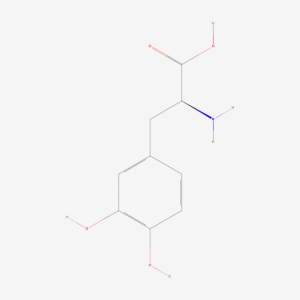
Researchers studying monoamine turnover alongside this compound commonly work with L-DOPA reference material (CAS 59-92-7), the substrate whose catabolic products shift once monoamine oxidase A is inhibited, and with apigenin reference standard (CAS 520-36-5), a flavone useful when the question is how a neutral polyphenol is distributed and conjugated compared with a permanently charged cation.
References
- Peter C, Hongwan D, Küpfer A, Lauterburg BH. Pharmacokinetics and organ distribution of intravenous and oral methylene blue. European Journal of Clinical Pharmacology. 2000;56(3):247–250. doi:10.1007/s002280000124 · PMID: 10952480
- Walter-Sack I, Rengelshausen J, Oberwittler H, Burhenne J, Mueller O, Meissner P, Mikus G. High absolute bioavailability of methylene blue given as an aqueous oral formulation. European Journal of Clinical Pharmacology. 2009;65(2):179–189. doi:10.1007/s00228-008-0563-x · PMID: 18810398
- DiSanto AR, Wagner JG. Pharmacokinetics of highly ionized drugs. II. Methylene blue—absorption, metabolism, and excretion in man and dog after oral administration. Journal of Pharmaceutical Sciences. 1972;61(7):1086–1090. doi:10.1002/jps.2600610710 · PMID: 5044807
- Petzer A, Harvey BH, Wegener G, Petzer JP. Azure B, a metabolite of methylene blue, is a high-potency, reversible inhibitor of monoamine oxidase. Toxicology and Applied Pharmacology. 2012;258(3):403–409. doi:10.1016/j.taap.2011.12.005 · PMID: 22197611
- Gillman PK. CNS toxicity involving methylene blue: the exemplar for understanding and predicting drug interactions that precipitate serotonin toxicity. Journal of Psychopharmacology. 2011;25(3):429–436. doi:10.1177/0269881109359098 · PMID: 20142303
- Youngster I, Arcavi L, Schechmaster R, Akayzen Y, Popliski H, Shimonov J, Beig S, Berkovitch M. Medications and glucose-6-phosphate dehydrogenase deficiency: an evidence-based review. Drug Safety. 2010;33(9):713–726. doi:10.2165/11536520-000000000-00000 · PMID: 20701405
- Rengelshausen J, Burhenne J, Fröhlich M, Tayrouz Y, Singh SK, Riedel KD, Müller O, Hoppe-Tichy T, Haefeli WE, Mikus G, Walter-Sack I. Pharmacokinetic interaction of chloroquine and methylene blue combination against malaria. European Journal of Clinical Pharmacology. 2004;60(10):709–715. doi:10.1007/s00228-004-0818-0 · PMID: 15619134
- Kim SJ, Ha DJ, Koo TS. Simultaneous quantification of methylene blue and its major metabolite, azure B, in plasma by LC-MS/MS and its application for a pharmacokinetic study. Biomedical Chromatography. 2014;28(4):518–524. doi:10.1002/bmc.3063 · PMID: 24122875
- Ivanov AV, Aleksandrin VV, Pudova PA, Galdobina MP, Filippov AG, Popov MA, Maslennikov RA, Kubatiev AA. Determination of methylene blue and detection of its demethylated metabolites in blood plasma using micellar electrokinetic chromatography with UV detection. Journal of Pharmaceutical and Biomedical Analysis. 2026;267:117155. doi:10.1016/j.jpba.2025.117155 · PMID: 41014882
Research use only. The compounds discussed are supplied as reference standards for laboratory research. They are not medicines, not dietary supplements, and are not for human or animal consumption. Nothing in this article is medical advice or a recommendation for use in humans. Any quantities mentioned are those reported in the published studies cited above and appear solely to describe that research accurately.