A PubMed search for bromantane run on 21 September 2026 returns 34 records. Exactly one of them concerns detection of the compound: a one-page correspondence item in The Lancet from 1997, indexed without an abstract. Narrow the search to bromantane and mass spectrometry and the count is zero. This is a substance on the World Anti-Doping Agency Prohibited List that international laboratories have been detecting in athlete urine since the Atlanta Games, and the method by which they do it has never been published in the indexed analytical literature. That gap, rather than any chromatographic subtlety, is the central fact about analysing this compound.
Key points
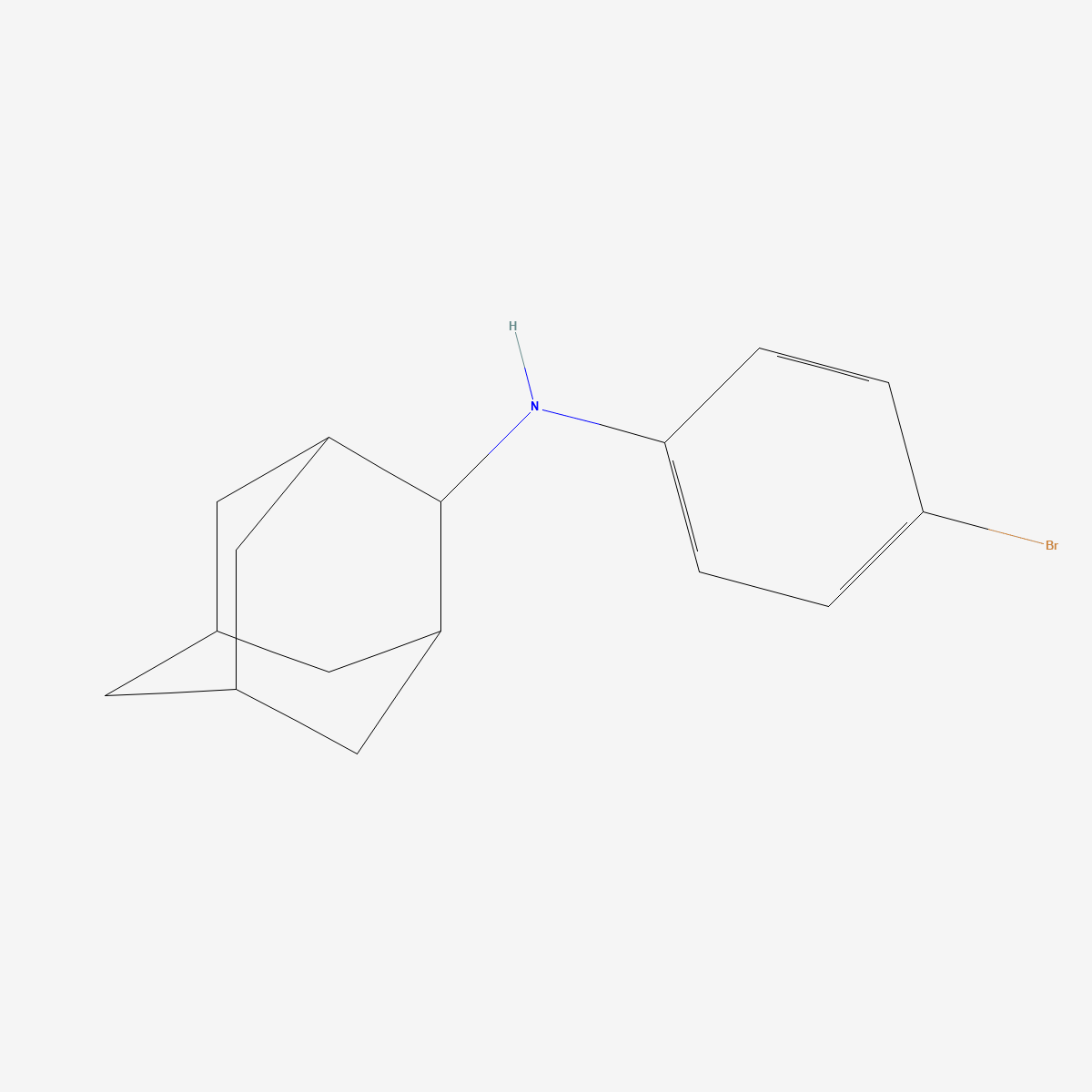
- Identity: bromantane is N-(4-bromophenyl)adamantan-2-amine (CAS 87913-26-6, C16H20BrN, MW 306.24), an adamantane cage bearing a secondary arylamine with a single bromine.
- Literature depth, counted rather than asserted: 34 indexed records for the compound; one concerns detection,[1] and it carries no abstract. No indexed method-development paper, no published excretion profile, no named metabolite targets.
- Bromine is the analytical gift: the near-1:1 natural abundance of 79Br and 81Br means every bromine-containing fragment appears as a doublet two mass units apart with roughly equal intensity — a signature no other element in the molecule can imitate.
- The compound is in circulation: a market surveillance study by twelve official medicines control laboratories across Europe and Australia identified bromantane in two samples, at 33.2 mg per unit, and classed it as a research chemical in the EU and Australia used as a prescription drug in Russia.[4]
- What is inferable, not measured: adamantane hydroxylation runs preferentially at tertiary C–H bonds in the biocatalytic literature,[7] which predicts where a hydroxylated metabolite of the cage would sit — but no such metabolite has been identified for bromantane in any indexed study.
- Status: supplied as a reference standard for laboratory research. Not a medicine and not for human or animal consumption.
The one detection paper, and the Games it came from
Bromantane entered anti-doping practice abruptly. The compound was reported in The Lancet in September 1997 by Burnat and colleagues under the title “Bromontan, a new doping agent”.[1] The record is indexed with authors, journal, volume and pagination. It carries no abstract, so this article does not relay a method, a limit of detection or a concentration from it, and neither should anything else.
The analytical context around that report is documented, and it explains how an unfamiliar molecule was caught at all. Reviewing the state of the field in the same year, Bowers noted that the Atlanta Olympic Games in 1996 marked the first time every specimen was screened by gas chromatography coupled to high-resolution mass spectrometry, with further improvement expected from GC/MS/MS and quadrupole ion traps.[2] High-resolution full-scan screening is precisely the configuration that flags a compound nobody has put on a target list: it records accurate masses for everything eluting, so an unexpected peak can be interrogated afterwards rather than discarded for not matching a known transition.
Bromantane subsequently became a listed prohibited substance. A review of the pharmacology of substances prohibited by the World Anti-Doping Agency counted 62 stimulants, representing 61 chemical entities, on the List at the time of writing, noting that the majority act on monoaminergic systems and that a small number of agents with different modes of action are also present.[3] Bromantane belongs to that smaller group, and its unusual mechanism is treated separately in our article on bromantane’s mechanism of action and the evidence for enzyme induction.
Why the missing metabolite data is the practical problem
For a doping-control target, the published record normally contains an excretion study: volunteers dose, urine is collected over days, metabolites are identified, and the method targets whichever species persists longest. That study does not exist for bromantane in the indexed literature. The single record addressing its disposition at all is a 1995 Russian-language paper correlating pharmacokinetics with the development of the pharmacological effect, also indexed without an English abstract,[8] and the wider reconstruction of what can and cannot be said about this compound’s disposition is set out in our article on bromantane pharmacokinetics and the limits of the ADME record. The consequence for analysis is that intact-drug monitoring is the only approach with any published basis, and the detection window is unknown rather than short.
Contrast this with the rest of the adamantane class, where the analytical literature is routine. Amantadine has been determined in human plasma and urine by simultaneous derivatisation and dispersive liquid-liquid microextraction followed by GC with flame ionisation detection, with limits of detection of 4.2 and 2.7 ng/mL in plasma and urine respectively, linear ranges to 5000 ng/mL and relative recoveries of 72–93%.[9] That is what a mature method record for an adamantane amine looks like. Bromantane has nothing equivalent, and not because the chemistry is harder.
Where a hydroxylated metabolite would sit can be reasoned about, provided the reasoning is labelled as such. A 2025 review of bacterial transformation of adamantane and its derivatives reports that biocatalytic systems using cytochrome P450 enzymes and microorganisms such as Pseudomonas strains and actinobacteria show high regional specificity in hydroxylating adamantane, primarily at tertiary C–H bonds.[7] Tertiary cage positions are the favoured sites for hydrogen abstraction, and the same preference is expected of mammalian P450s, predicting hydroxyl-bromantane isomers 16 nominal mass units above the parent. That is a prediction from the behaviour of a chemical class, not a finding about this molecule, and an assay built on it would need authentic synthesised standards before any peak could be assigned.
The bromine doublet does most of the identification work
One structural feature makes bromantane easier to recognise than its literature would suggest. Bromine has two stable isotopes, 79Br and 81Br, whose natural abundances are close to equal. Every ion that retains the bromine atom therefore appears as a pair of peaks separated by two mass units with roughly equal intensity. Nothing else in the molecule — carbon, hydrogen, nitrogen — produces an isotope pattern remotely like it, and the pattern survives fragmentation: a fragment showing the doublet contains the brominated ring, a fragment without it does not.
Read against the molecular formula C16H20BrN, this gives a structured interpretation before any reference spectrum is consulted. The molecule divides in two at the secondary amine: an adamantyl portion carrying no halogen and a 4-bromophenyl portion carrying it. A fragment retaining the doublet belongs to the aniline side; a fragment with a clean single-isotope signature is cage-derived. As a first filter for whether an unknown peak belongs to this compound class at all, that is stronger than retention time.
The same reasoning applies to elemental composition in high-resolution work. Bromine’s mass defect is large and negative relative to carbon and hydrogen, so an accurate mass measurement assigns the single bromine unambiguously at routinely available resolutions. This is the part of bromantane analysis that is genuinely easy.
Where the real difficulty lies: the arylamine and the cage
The analytical vulnerabilities of this molecule are chemical rather than instrumental. The secondary aromatic amine is oxidisable and light-sensitive, which matters for stock stability and for any method involving oxidative sample clean-up; degradation in the vial produces peaks that belong to no administered substance. Free arylamines are also commonly derivatised before gas chromatography precisely because they tail on untreated stationary phases, which is why the amantadine method cited above builds derivatisation into the extraction step rather than treating it as optional.[9]
The adamantane cage contributes the opposite problem. It is highly lipophilic and chromatographically retentive, convenient for separation but awkward for recovery from aqueous matrices: partition into plastics, adsorption onto glass and incomplete elution from reversed-phase sorbents are all plausible loss mechanisms, and none is documented for this compound. An extraction recovery figure for bromantane therefore has to be measured in the laboratory that intends to rely on it, because there is no published value to compare against.
The supply-chain context, measured rather than asserted
Bromantane is not an obscure laboratory curiosity in circulation terms. A market surveillance study organised by the General European Official Medicines Control Laboratory Network with associated member Australia documented 159 different samples between January 2020 and September 2024, yielding 166 molecular identification entries covering 34 distinct molecules. Most samples were sold or presented as dietary supplements (49%) or medicines (32%), and 69% were collected from the illegal market. Central nervous system stimulants — modafinil, the modafinil prodrug adrafinil, methylphenidate and bromantane — accounted for 22% of the reported molecules. Bromantane itself appeared in two identification entries across two samples, with the form in which it was presented recorded as unknown, at 33.2 mg per unit and with no raw-material purity figure reported. The authors classify it as a research chemical in the EU and Australia that is used as a prescription drug in Russia.[4]
Two figures in that study are directly useful. Thirty-three milligrams per unit is a real measurement from a real seized sample, made by an official control laboratory, and it is the only quantitative analytical number for bromantane in any product that this search located. Two samples out of 159 also sets the prevalence honestly: this compound is present in the market surveyed, but it is a minor constituent of it.
The regulatory picture around such products is documented from two further directions. A review of unauthorised ingredients in nootropic dietary supplements, examining 50 selected products, notes that the first nootropic prohibited in sport was fonturacetam in 1998, that many popular nootropics are unauthorised food or supplement ingredients under European Commission rules while several are authorised supplement ingredients in the United States, and that some substances qualify as non-approved or related substances only under catch-all language in the WADA Prohibited List.[5] A systematic review from an anti-doping agency research team identified only 9 research studies — 7 interventional and 2 case studies — on substances plausibly affecting cognition in a sports context, and, reviewing one national supplement market, found 120 synthetic substances with potential procognitive properties, of which 45 were labelled ‘unclear’ and 19 presumed to meet WADA criteria.[6] A prohibited compound with no published detection method sits inside exactly that zone of uncertainty.
Establishing identity without a monograph
There is no pharmacopoeial monograph for bromantane, so identity and purity rest on the general toolkit. Two methods deserve specific mention because they do not depend on a compound-specific literature existing.
Proton and carbon NMR establish constitution rather than merely consistency, and this molecule predicts an unusually legible proton spectrum: the 4-bromophenyl group gives the characteristic para-disubstituted AA’BB’ pattern of two two-proton doublets, the secondary amine gives an exchangeable NH, and the remaining signals belong to the adamantane cage, whose 2-substituted connectivity is distinguishable from the more common 1-substituted arrangement by the pattern of the methine and methylene resonances. Total proton count is twenty. An integration that does not reconcile with that arithmetic is a finding about the sample, not about the instrument.
Where an absolute number rather than a structure is required, quantitative 1H NMR is defensible as a primary method. An international collaborative study across thirteen laboratories measured the purity of three samples certified by conventional primary methods — certification by mass balance and by coulometric titration among them — and concluded on the basis of normalised error values that qNMR has the competence to match the quantification performance and accuracy of those methods.[10] Work on organic calibration standards of varying structural complexity demonstrated equivalence between qNMR and mass balance and recommended using the two in tandem, which minimises the chance of a bias shared by neither.[11] For a compound with no monograph and no published assay, that tandem is the right standard to hold a supplier to.
Frequently asked questions
Is bromantane detectable in anti-doping testing?
Yes, and it has been since the late 1990s — the compound was reported as a doping agent in 1997[1] and is prohibited in sport. What is absent is the published method: PubMed indexes no method-development paper, no validation study and no excretion profile for bromantane, so the detection window and the metabolite targets are not matters of public record.
How long does bromantane stay detectable in urine?
No published excretion study establishes a detection window. Anyone needing one has to generate it, and the absence of identified metabolite targets means intact-drug monitoring is the only approach with any published basis. Extrapolating a window from the compound’s lipophilicity or from adamantane relatives is inference, not measurement, and should be reported as such.
Can GC-MS identify bromantane reliably?
The bromine isotope doublet makes recognition of brominated fragments straightforward at nominal mass, and high-resolution measurement assigns the single bromine outright from its mass defect. The compound-specific caution is chemical: a free secondary arylamine tails on untreated gas-chromatographic phases and is commonly derivatised, as in published methods for related adamantane amines,[9] and no thermal-stability study for bromantane in a heated injector has been published.
What documentation should a bromantane reference standard carry?
Given the absence of a monograph, the useful package is a chromatographic purity figure with the method and detection wavelength stated, a mass measurement showing the bromine isotope pattern and supporting the elemental composition, and proton NMR data that reconcile with the twenty-hydrogen count and the 2-substituted cage; where an absolute assay matters, qNMR against a certified internal standard is defensible as a primary measurement.[10][11] Our bromantane reference standard, assayed at ≥99.75% purity, ships with identity documentation available on request.
Related compounds in our catalogue
Laboratories assembling a panel for screening work frequently hold modafinil reference material (CAS 68693-11-8), which appeared alongside bromantane among the stimulants detected in the market surveillance study described above, and FLModafinil (CAS 90280-13-0), whose analytical record runs in the opposite direction — a documented thermal-degradation artefact and a published human elimination study, for a compound with far fewer pharmacology papers than bromantane.
References
- Burnat P, Payen A, Le Brumant-Payen C, Hugon M, Ceppa F. Bromontan, a new doping agent. The Lancet. 1997;350(9082):963–964. doi:10.1016/s0140-6736(05)63310-7 · PMID: 9314900
- Bowers LD. Analytical advances in detection of performance-enhancing compounds. Clinical Chemistry. 1997;43(7):1299–1304. PMID: 9216478
- Docherty JR. Pharmacology of stimulants prohibited by the World Anti-Doping Agency (WADA). British Journal of Pharmacology. 2008;154(3):606–622. doi:10.1038/bjp.2008.124 · PMID: 18500382
- Vanhee C, Deconinck E, George M, Hansen A, Hackl A, Wollein U, El-Atma O, Beerbaum N, Aureli F, Borioni A, Poplawska M, Blazewicz A, Roschel K, Marson C, Mendoza Barrios M, Hakkarainen B, Blomgren A, Bakker-‘t Hart I, Miquel M. The occurrence of illicit smart drugs or nootropics in Europe and Australia and their associated dangers: results from a market surveillance study by 12 official medicines control laboratories. Journal of Xenobiotics. 2025;15(3):88. doi:10.3390/jox15030088 · PMID: 40558871
- Jędrejko K, Catlin O, Stewart T, Anderson A, Muszyńska B, Catlin DH. Unauthorized ingredients in “nootropic” dietary supplements: a review of the history, pharmacology, prevalence, international regulations, and potential as doping agents. Drug Testing and Analysis. 2023;15(8):803–839. doi:10.1002/dta.3529 · PMID: 37357012
- Pokrywka A, Surała O, Grabowska K, Przybyła M, Granda D, Małecki A, Faiss R, Nowacka-Chmielewska M. “Brain doping” substances: prohibited or not in sports? Biology of Sport. 2025;42(4):189–201. doi:10.5114/biolsport.2025.150047 · PMID: 41048238
- Ivanova AA, Vetrova AA. Bacterial transformation of adamantane and its derivatives: regioselectivity and biocatalytic approaches. Biology (Basel). 2025;14(10):1429. doi:10.3390/biology14101429 · PMID: 41154833
- Sergeeva SA, Krapivin SV, Losev AS, Morozov IS. Correlated interconnection between pharmacokinetic and dynamic development of the pharmacologic effects of bromantane. Biulleten’ Eksperimental’noi Biologii i Meditsiny. 1995;119(3):305–308. PMID: 7795204
- Farajzadeh MA, Nouri N, Alizadeh Nabil AA. Determination of amantadine in biological fluids using simultaneous derivatization and dispersive liquid-liquid microextraction followed by gas chromatography-flame ionization detection. Journal of Chromatography B. 2013;940:142–149. doi:10.1016/j.jchromb.2013.09.035 · PMID: 24157523
- Miura T, Sugimoto N, Bhavaraju S, Yamazaki T, Nishizaki Y, Liu Y, Bzhelyansky A, Amezcua C, Ray J, Zailer E, Diehl B, Gallo V, Todisco S, Ofuji K, Fujita K, Higano T, Geletneky C, Hausler T, Singh N, Yamamoto K, Kato T, Sawa R, Watanabe R, Iwamoto Y, Goda Y. Collaborative study to validate purity determination by 1H quantitative NMR spectroscopy by using internal calibration methodology. Chemical and Pharmaceutical Bulletin (Tokyo). 2020;68(9):868–878. doi:10.1248/cpb.c20-00336 · PMID: 32565492
- Davies SR, Jones K, Goldys A, Alamgir M, Chan BK, Elgindy C, Mitchell PS, Tarrant GJ, Krishnaswami MR, Luo Y, Moawad M, Lawes D, Hook JM. Purity assessment of organic calibration standards using a combination of quantitative NMR and mass balance. Analytical and Bioanalytical Chemistry. 2015;407(11):3103–3113. doi:10.1007/s00216-014-7893-6 · PMID: 24948087
Research use only. The compounds discussed are supplied as reference standards for laboratory research. They are not medicines, not dietary supplements, and are not for human or animal consumption. Nothing in this article is medical advice or a recommendation for use in humans. Any quantities mentioned are those reported in the published studies cited above and appear solely to describe that research accurately.